
 RSS Feed
 Apple Podcasts
 Spotify
 Amazon Music
 Overcast
 Castro
 PocketCasts
 How Mentoring Ignites Youth Potential In Colorado with Elycia Cook

Key Takeaways
- Mentoring is about igniting the inherent potential, access, and social capital that every young person already possesses rather than trying to fix or change them.
- There is no such thing as a perfect mentor; Big Brothers Big Sisters Colorado seeks perfectly imperfect individuals who are simply willing to show up consistently.
- Child safety is a top priority, resulting in a rigorous vetting and matching process designed to find genuine commonalities and shared interests between Bigs and Littles.
- The impact of mentoring is reciprocal, profoundly transforming the lives, empathy, and community connections of the mentors just as much as the youth they serve.
- Supporting youth potential can be done at any stage of life, debunking common myths that volunteers must be a certain age, have raised their own kids, or possess unlimited free time.
We sit down with Elycia Cook, CEO of Big Brothers Big Sisters Colorado, to get real about what mentoring is and what it is not, from safety and matching to the slow work of earning trust. We also dig into “mentor life,” the ripple effect from one consistent relationship, and why showing up beats being perfect every time.
• Elycia’s personal story of growing up with adversity and being shaped by mentors
• Mentoring as igniting potential through access, opportunity, and social capital
• What Big Brothers Big Sisters Colorado looks for in Littles and Bigs
• How matchmaking works, why safety checks are strict, and what happens when a match is not the right fit
• The mac and cheese story as a lesson in patience, consistency, and trust-building
• How mentoring transforms Bigs too, including empathy, relationships, and community connection
• The biggest myths that stop people from volunteering, including time, age, and fear
• How to support the mission through volunteering, advocacy, career talks, and donations
If this conversation sparked something in you, share it with a friend, subscribe, and leave a review. Then take one step: visit biglittlecolorado.org to volunteer or donate, and tell us what kind of mentor you want to be.
Website: https://biglittlecolorado.org/events/big-little-gala/
Credits: Raechel Sherwood for Original Score Composition.
Links:
YouTube Channel: Uncover The Human
Linkedin: https://www.linkedin.com/company/wearesiamo
Instagram: https://www.instagram.com/wearesiamo/
Facebook: https://www.facebook.com/WeAreSiamo
Website: https://www.wearesiamo.com/
Frequently Asked Questions
What does Big Brothers Big Sisters Colorado do?
Big Brothers Big Sisters Colorado is the oldest and largest mentoring organization in the state, matching youth aged between nine and twenty-one with adult mentors to ignite their power and potential through consistent, trusted relationships.
How can I support Big Brothers Big Sisters Colorado if I cannot be a mentor?
You can support the mission by making donations, participating in events like their annual Big Little Gala, bidding in their global silent auctions, advocating for youth, or spreading the word in the community.
00:00 - Welcome And The Mentoring Mission
02:13 - Elisia’s Story Of Mentors
04:36 - What Mentoring Actually Means
09:59 - Tay, Trust, And Showing Up
17:26 - How Mentoring Changes The Mentor
21:03 - Waiting Lists, Myths, And Matching
30:25 - Funding The Work And Getting Involved
39:02 - Credits And How To Reach Us
[INTRO]
Alex Cullimore: Hello, Cristina.
Cristina Amigoni: Hi. We've got a special episode today.
Alex Cullimore: Yes, a special episode and we're recording on a Friday, which I guess is kind of typical.
Cristina Amigoni: Pretty typical. The day is not special. The recording we just had is special.
Alex Cullimore: Yes. Yes, we had our guest, Elycia Cook, who is the CEO of Big Brothers, Big Sisters, Colorado, and just incredible passion for the work she does, incredible communicator. It is just a wonderful conversation all around.
Cristina Amigoni: It is. The mission is truly needed right now and pouring into this mission are wonderful people. So, we will be advertising this and putting all sorts of information out to support this incredible organization that has been around in Colorado for a hundred and eight years. So, it's incredible.
Alex Cullimore: Yes. Yeah.
Cristina Amigoni: Yeah.
Alex Cullimore: Going on a hundred and ten years soon, so that's very exciting. Yeah, there's lots of ways to get involved, and you'll hear more about it in the next few episodes as well.
Cristina Amigoni: Yes, for sure. Thank you for listening.
Alex Cullimore: Enjoy.
[EPISODE]
Alex Cullimore: Welcome back to another episode of Uncover the Human. Today, Cristina and I are joined by our guest, Elycia Cook. Welcome to the podcast, Elycia.
Elycia R Cook: Thank you. Thank you for having me, Cristina and Alex.
Alex Cullimore: Wonderful to have you on.
Cristina Amigoni: It is wonderful to have you on.
Elycia R Cook: Thank you.
Cristina Amigoni: Yeah. So, tell us about yourself, your story, your passion.
Elycia R Cook: I have a really big story, and I don't want to go on too long, but my name is Elycia Cook, and I currently serve as CEO of Big Brothers, Big Sisters, Colorado. We're the largest and the oldest mentoring organization in Colorado, founded in 1918. So, we're pushing, we're pushing an anniversary year.
But how did I get into this? My life is a product of mentoring. I was born and raised in Detroit, Michigan, born to a teen mom, literally born during the 1967 riots. Just told you my age. During the night, my mom was police escorted to the hospital to give birth to me at 16. So, you can literally say I was born into adversity. My mom was the single mom of three girls before the age of 19. So, my life was filled with lots of challenges, trauma, some of the craziest things one can imagine for a child. But I always say my mom did the best she could with what she had, and that you can't give what you don't know. That is why I'm so grateful for the many mentors who were in my life.
And they gave me so much of what my mother couldn't. She wanted to, but couldn't. And it led me to become a first generation high school and college graduate. It led me to live in Japan and today be a black woman fluent in Japanese. And it led me to become the CEO of the largest mentoring organization in the world. It also led me to have such a passion about mentoring that I am a mentor myself. Always have been and always will be. I do it because I want to be the person I needed most as a child.
Cristina Amigoni: That is that is quite the story. Yes. That's a wonderful story.
Elycia R Cook: Yeah. So, for mentoring for me, it's a thread that connects every area and every chapter of my life. And it's not something I do, it's just authentically who I am. And I think you'll hear more about that as we talk.
Alex Cullimore: And can you talk a little bit about what Big Brothers Big Sisters does, what the mentorship looks like?
Elycia R Cook: Yeah, so our official mission is that we ignite the power and potential of youth through mentoring relationships. And there's a lot in that. We show up for kids in ways that maybe some of them never have anyone outside of their family. We help give them access to social capital. We help lift their voice.
We help to be a trusting, caring partner, friend in their lives. And we help walk them through or walk them towards the future they imagine and envision for themselves. A lot of people think mentors are teachers or we're fixers or we're someone telling kids what to do. We are just humans ourselves who take what we have and what we know. And we pour it all into a young person. And we do it for, in many of our cases, the rest of their lives. We have so many mentoring relationships that have been around for 50, 40, 30, even 60 plus years, we have a mentoring relationship that started here at Big Brothers, Big Sisters on record. Our idea is that we-
Alex Cullimore: That's amazing.
Elycia R Cook: Ignite the potential, not give the child potential. We believe every child, every person is born with potential, but we're not born with opportunity and access.
Cristina Amigoni: Yeah. Wow. That's amazing. That's wonderful. And I love that definition of mentoring. that it's ignite the potential, not give, and it's not about telling, but it's really about helping grow, helping flourish.
Elycia R Cook: Yes.
Alex Cullimore: Yeah. Yeah, uncover what was already there. It's a great idea, and I absolutely agree. I think everybody has that potential. It's just as your story indicates, people just need the opportunity to access it.
Elycia R Cook: And sometimes it doesn't look like what your parents think it should be. It doesn't look like what society thinks it should be. But as a mentor, you're there for the child to ignite their potential and their voice.
Cristina Amigoni: That's yeah, that's definitely key. What do you see, like, what are the demographics? What are the ages of the bigs and the littles, I guess, that you see.
Elycia R Cook: Yeah, so our littles, we don't start matching. We start the matching process at eight, but we don't really start matching until nine because we want the child to be of age enough to have agency and voice into who they want, what they like, why they're here. A lot of times we have younger youth who come and we make sure we interview all our kids themselves and they'll say, I don't know, my mama brought me here or my grandma brought me here. But we want to make sure that they understand what they're getting into. And like I said, our official mentoring relationship with us kind of ends at 21, but the unofficial mentoring relationship goes on and on. Our demographic, those which come to us most, are truly single families of boys. That's the most who comes to us. Because, as you know, in those cases, these kids are surrounded by women influences, single moms, and they're just looking for male role models, positive figures in their young person's life and their child's life. But about 54% of the youth we serve are boys. And then in terms of the bigs, the bigs, I don't know, they come from all walks of life. And this is really important because some people might think I'm too old to be a big, too young to be a big, I'm too busy raising my own kids to be a big. There is never a perfect time to become a big. There's never a perfect big. Bigs are perfectly imperfect. So, a lot of our bigs who come to us, a lot of times people are implants into Colorado, people looking to connect to the community, which right now, with the population of Colorado going down because of costs…
Cristina Amigoni: Yes.
Elycia R Cook: That's causing a challenge for us. A lot of times our bigs are a lot of people over 45, they've kind of raised their kids, did their thing, and they're learning how to give back to the community, but they'll feel real insecure about their age. But actually, we show our data shows they make some of the best bigs. But also when you're young, a lot of times, you know, when you're out of college and all in your building your career, you feel like I've got to build something first before I can give, which is the complete opposite of what these kids need and what you need. So, our thing is you don't have to be perfect, you just have to be present. If you got six to eight hours a month, you can change someone else's life and your life can be changed because - I can share later just how much the life of a big is changed. And you can just change the complete trajectory of not only that child, but an entire family. And if you change a child, you change a family, you change a family, you change a community, you change a community, you change Colorado, and so on.
Cristina Amigoni: Yes, yes. Yeah. That's very true. Very inspiring. Yeah. And so, and you mentioned before we talked, that you've had your own experience being matched and being a big. So, tell us about that.
Elycia R Cook: My little Tay, I'm looking at her right now. I wish I could turn it around and show it to you because she - and my own daughters. I'm a mom of two daughters. And first I want to say that I've always found a way to mentor and to give back to my community. In fact, when my children were growing up, many kids learned their ABCs first. My kids learn how to say community service is the rent we pay for life on this earth. And I am not lying. They were two and they could say that. And but anyway, Tay is my little and I got matched with her when she was 12 years old.
Alex Cullimore: Yes.
Cristina Amigoni: It's wonderful.
Elycia R Cook: When I came to Big Brothers, Big Sisters, because I never want to ask someone to do something that I wouldn't do myself. And I had been a mentor to many other kids, but I really wanted to do it in our program because I wanted to feel what the bigs feel, see what they feel, be able to hear and know. But Tay came to me, and I'm so proud of her mom. Her mom lost her own mom at an early age.
She had lost her own mom. She was very close to her. And she recognized her own like depression and challenges and felt like she needed somebody to help her with Tay. And I'm always proud of families who can say, I need help. I appreciate that so much. So, she came to us and we have a really extensive interview process, which is also says a lot for the parent and the big because child safety is everything. So, our process, I mean, we might be worse than the FBI, but you know it's all about protecting our kids, right? Child safety is the number one thing. And when you can give yourself up like that. But anyway, intentionality too, because a lot of times families will have in their mind what type of big they want for their child. But the data shows that commonality, uniqueness. A lot of times parents like, I want a black man or I want this or that. And those things are important and cultural competency is important to us, but really making that perfect match. And I will say Tay is the perfect match for me. Let's see, she wrote in her application that she wanted a black boss woman who was a bit of a diva. She wrote this in her application.
Because she's a girly girl. And I wrote in my application, I wanted a young, preferably black girl over the age of eleven. And I said, and if she plays sports, that's fine. I will encourage her. But I'm the ultimate girly girl and I'm a bit of a diva. So, I I prefer someone… And when our staff saw our applications, they said, This is it. But I had to choose Tay because you don't want to present a little to a big and they say that's not for me. And then she had to choose me. So, we chose each other November eleventh, I think 2022. So, we're going on four years. She's going into her senior year now. And I've been so proud to walk with her every step of the way.
Alex Cullimore: That's very cool. It's both encouraging to know that there's a, you know, harder than FBI admittance criteria. But also what a great batching criteria. It makes sense that like people have a lot of preconceived notions, but if you're gonna develop somebody young, it feels like you'd have to have more of that just authentic connection with what is what what really fits between the two people.
Elycia R Cook: Yeah. Yeah. Yeah. Like more than some of the things we think, it depends upon their interest, you know? And that's where we see the connections really, really happen. The magic really happens. I will be in her life for the rest of her life or as long as she will have me.
I will say she probably adored me more at twelve and I know she's I know she still loves me, but let's just say that sixteen, seventeen year old, your friends start to take a little higher priority. That's okay. We're gonna be spending tomorrow together and it's gonna be great. She'll come back. She'll remember a lot of things I told her. She'll come back, but it's awesome.
Cristina Amigoni: Yes, yes, yes. She’ll come back. Yes, yes, yes. Yeah, she'll come back. Yeah, those teenage years get a little more challenging with the adult connections around us. But definitely she'll come back. What happens if somebody's matched and then it it doesn't after the first few weeks, months, it doesn't seem to be working out well.
Elycia R Cook: And that does, that absolutely does happen. We spend a lot of time, first of all, we try to do a lot of training and preparation because I think sometime bigs go in thinking, my gosh, this child is gonna love me and I'm just gonna change their life and I'm going to and as you know, we don't it doesn't work like this. I am blessed because Tay is a talker, and so am I, as you can tell. But Tay is a talker, but you don't know how many phone calls we get that says, I picked them up and they're like this. On the phone. And so one of my one of our most exciting stories is called the mac and cheese story, where a big had a little that just wouldn't talk, but she knew she liked Noodles and Company’s mac and cheese.
So, when she got in the car, she would always say, Is this a mac and cheese day? And if she said yes, they just go and sit and eat mac and cheese, and she would just wait. And they probably did that for six months. And then she opened up and opened up and opened up. And four or five years later, she's helping her go to college. But your question was, what happens when it doesn't work out? And we try to first set expectations on both sides.
We try to get to the root of the issue. But if it doesn't work out, we will unmatch. And unless there's something material or a safety issue, or then we unmatch and we go back to the drawing board. The ultimate goal is to get the child what they need, but it's also to take care of our bigs. You know, especially now, we're dealing with loneliness, mental health challenges, not just for our kids, for our bigs, for you, for me, for different people. And for different reasons, it doesn't work out. Sometimes the big travels too much. That's one of our biggest things. When the bigs travel too much, and the little may not feel like they have enough time for them. Or equally so, you know, our families have so many challenges in their lives. They move a lot.
Phones get disconnected a lot and all of that. So sometimes just life happens and with the rising cost in Denver to live, we find our littles moving further and further out of the city just to survive, you know. But we do our best to quickly rematch or if a one on one match is not what turns out is best, then we have several community partnerships and relationships and we try to identify a better fit.
Alex Cullimore: Hmm. That's great. you mentioned that there's a lot of transformation for the people being mentored, but there's also transformation for the mentors. What have you seen happen? What kind of transformation do you enjoy the most when you get witness it?
Elycia R Cook: When I get to witness it, well, just like the story, the mac and cheese story I told you, this girl that wouldn't talk for six months and I'd see them together. In fact, I think a couple of years ago, that particular match was our match of the year. And this girl did not look like her big. They did not come from the same socioeconomic background or anything. And just to see the beauty and the love of their relationship.
And another thing I love because like I said, a lot of times our bigs and littles don't come from the same socioeconomic backgrounds. we try to find commonality from a cultural competency and all that standpoint, but we don't always, but you know what? That's not a bad thing. I have seen bigs change the way they vote after after because you can't hate from up close, right?
Cristina Amigoni: No, you can't.
Elycia R Cook: I've seen bigs change the way they vote. I have seen littles completely come out of their shell. I have seen parents and the big ugly cry about what this stranger did coming into their lives and loving them. One of my best parts of my job is our annual graduation from high school. And technically out of the program, but we extend on.
And just to hear the story of the child, I've seen the strongest manly boy break down in tears sharing about his big. And I have seen mothers sob about what this person did for their child.
Cristina Amigoni: Wow. That's so inspiring. That gives a lot of hope.
Elycia R Cook: And I've seen so many bigs. I don't want to forget this because what I we have so many littles that end up in the bigs weddings. We have so many littles that is one of the first persons to hold a big's new baby. And so and we have so many bigs who say they taught me how to love. They taught me how to be unconditional. I don't think I could have been a good parent if I hadn't had this experience. It's life changing.
We are relational and I can't think of a better way of showing us how to be in relationships than to choose someone that you don't have to choose to love and to be there.
Cristina Amigoni: Yes. Yes. That is so powerful. Yeah. There's so much have to that we have to go through. That's to like actively choose the consistency, the showing up, the being there, the having the patience to spend six months having mac and cheese and not talking. But continuously do that. That is that's incredible.
Elycia R Cook: Yeah. And not talking.
Cristina Amigoni: …the return, just the skill, the doing that and even the transferring, I'm sure that there's a transferring of that learning that lesson. It's like, so this is what consistency looks like. This is what looking at a challenge every single time and keep going and you keep going looks like.
Elycia R Cook: Yep, exactly. And I learned so much, especially from my career, from my little from Tay. Like I learned what clock that means and I learned what period and all the things. You know how your own kids think you're not cool. But Tay thinks I'm the coolest thing in the world. And that really helps me. And she gives me the best dating advice.
Cristina Amigoni: That is excellent, for sure. Yeah, yeah. So how does one get involved as a big? Or how do you find the bigs and how do you find the littles, I guess?
Elycia R Cook: We do a lot, but the little side actually because we're a hundred and eight year old organization we have so many years and actually century of success. Word of mouth I mean so many of our littles come to us because a lot of siblings so we have provided bigs for many siblings, cousins, family members, but also the Department of Human Service recommends us.
Maybe if I know situations when kids may have to see the court for some reason, as long as it's not too extreme. They're recommended to us. Counselors recommend to us, churches recommend to us. But probably the biggest is word of mouth on the family side. We really don't have a shortage of families who come to us, especially those seeking support for boys.
On the big side, same thing. We have so many people who maybe their dad was a big, their uncle, but that's a little bit harder because number one, volunteerism is down post-COVID, is starting to inch back up. number two, while I say that commonality matters the most, there still is something for having a diversity of bigs in terms of cultural diversity, racial diversity. And sometimes one-on-one mentoring does not necessarily appeal to the way or speak to the way black and brown people may mentor for many reasons, for fear and all of that. But we partner with schools, we partner with a lot of community organizations to get the word out for mentors, churches. We partner when people are coming in new to town, like with the Denver Economic Council, we try to make sure here is a community way to connect. But I will say at any given time, we can have two to three hundred youth on our waiting list waiting for a big, and 70 to 80 percent of those are boys. And while we are willing to match a female big with a male. A lot of times that's just not what the parents or the kids are looking for. They're in a single home. They have grandma, they have auntie. Schools are still full of women teachers. So, we do have that gap. And that's why we've leaned a lot into our school-based mentoring and our peer mentoring, meeting kids where they are. Also, with our peer mentoring and if they're in the same school in the same community, the demographic is gonna look the same.
And you're meeting people where they are, and you have this group mentoring mentality where not only they're mentored by one person, they create this peer group of leaders and mentors. So, our school-based programs are very strong right now. But because our signature programs are the one on one, that's what people usually come to us for. So, we are constantly trying to raise money and raise awareness of the great need and to debunk all the myths of what mentoring is. We're trying to take away the fear. It's not being perfect. It's just being present. And mentoring is not a nice to have. It is necessary.
Cristina Amigoni: That is excellent. Yeah. What do you see some of the other myths that you're debunking constantly are?
Elycia R Cook: About mentoring. some of them are like I said, you have to be perfect. It takes a lot of time. What if the kid doesn't like me? What if I get accused of something? What if I end up in a compromising situation? What if one of the things we constantly because like I said, a lot of our mentors may come from a different socioeconomic level. I am constantly telling bigs, you know, being poor is not a crime. You may see things that you you haven't seen in the way you were raised. Do not judge these families. They love their kids just as much as your mama loved you and your daddy loved you. But there are systemic things against these kids, and your job is to help break down some of those systems - poverty, oppression, depression. Your job is to show up consistently and continuously. And a lot of times another myth is that you just have to like have had kids or know something about kids. And then my biggest one, I really want to share this we get a lot of people say I will mentor after my kids grow up. I talk about when my kids were little, mentoring and community service has always been a part of our lives. In fact, we made it who we are. And my two daughters are some of the best community leaders and servants ever because they saw that their entire lives. And you can easily be a parent and care about someone else's child. You can and your child will learn something too. Also, it taught my children gratitude and how blessed they are to see people in different situations than them. So that myth of I will do it once my kids grow up, I think that's a cop out. Or just afraid. And that's okay. That's okay. You're afraid. I shouldn't have said cop out. Afraid. But I'm trying, we wanna debunk that. You can definitely do it together. You can make your kids a part.
Alex Cullimore: I would imagine it would help with learning how to parent. I mean you're you're doing so much mentoring and learning so much about that, that would give you an entirely new dimension on both your own parenting as well as just any engagement with any relationship really. It's just that it would be a great fostering ground for understanding those better.
Elycia R Cook: Absolutely. Another myth is when then when you get older, like I'm 59, and sometimes I swear I don't know what the heck Taya's talking about. But another myth is that I'm too old, I'm not cool, I'm not this, I'm not that. That is not true at all. Some of our best mentors are 70 something, pushing 80. It's all about your intentionality and your heart.
Cristina Amigoni: Yes, yes, absolutely and definitely is. So, if I wanted to become a big, what would be my journey?
Elycia R Cook: Well, first of all, we direct you to your…well, we either have some sort of informational conversation with you, direct you to our website, and you can kind of watch some stories about bigs and what it's like to be a big and our website is biglittlecolorado.org. You can start an application process.
One of the things that's really important to us is that you lead your own journey a little bit. I mean, of course we call you, of course we follow up with you, but if you are not committed enough to finish the application process, how committed are you going to be?
Cristina Amigoni: Yes. It's a good test.
Alex Cullimore: A bit of a red flag, yeah.
Elycia R Cook: Yes. So, we make sure we let you kind of go at your own pace, if you will. Of course we are there for you. And then after that, once you've finished, we will have you come in for an interview. We do a full background check, we do training. I think sometimes though people will might get a little upset because they might sit on the waiting list longer than they thought they would. But I told you how important it is to us that intentionality and that perfect match. Just because you're ready doesn't mean we have a child that's perfect for you. Or just because you think you're the best thing since sliced bread, the child, the child still has to choose you. So, for us, it's we try to tell people: no matter how much money you have, no matter how much you like kids, no one has the right to be a mentor.
Mentoring a child is a privilege. And just if you have, just have the stamina to wait because when we match you, it is going to be perfect and beautiful. And if it isn't, we'll find someone else for you. So, it can take a little bit of time. A lot of times though, if you if males, you get matched much faster because we have so many boys in the pipeline. Girls might take a little bit, but we'll get you and we'll do everything to support you. And that includes post-match what we call match support by our program specialists who are trained in trauma informed care and best practices, kind of like a social worker. So, I always ask people don't get offended if you get asked the same questions again. Don't get offended. We are all about protecting this child, protecting you.
Cristina Amigoni: That gives me a very good picture of what it's like, yes.
Elycia R Cook: And the same for the families. Families sometimes take a little bit more time because they have multiple kids and they're working. So, we try to do everything we can to make it easy as possible. Help with multiple languages, different times of the day for interviewing, whatever you need. We're here in service to you.
Cristina Amigoni: But I like that kind of making sure the intentionality is there and it's not just like, yeah, I'll do it when I get there. And I feel like it, yes. For sure.
Elycia R Cook: And then one of the challenges with our wait list too is always funding. Funding. This has been the hardest funding year in my six-year tenure with the state deficit and the many federal budget cuts. And that's why we have our largest fundraising event of the year coming up, our big little gala, and it's called the voice of our youth.
Cristina Amigoni: Yes, that's coming up.
Elycia R Cook: So yes. So, we need to raise about six hundred thousand dollars at that event. So, I hope this will allow us to spread the word and get people involved. And even if you're not in Colorado, our silent auction opens on August twentieth. You can participate from anywhere in the world in that. Yes.
Cristina Amigoni: Excellent. Perfect. Yes. Yeah. And we'll have all that information in our show notes and when we advertise the podcast, for sure, for the silent auction.
Elycia R Cook: Perfect. Yeah. And if they don't see it, just go to biglittlecolorado.org. And I'm so proud because for this gala, the Voice of Youth, my mentor for when I was nine years old is coming. And then Tay, my mentee, and the three of us will be on stage and it will represent something we have trademarked called mentor life. Always have someone investing in you…
Cristina Amigoni: Excellent.
Elycia R Cook:…and pay it forward by always investing in someone else. Stephanie invested in me, I am now investing in Tay, and we together are investing in the community.
Cristina Amigoni: That's wonderful. That's such a great example.
Alex Cullimore: That’s really cool. Yeah.
Elycia R Cook: So come on, come on, check out the trailer.
Cristina Amigoni: Yes. That is great. So definitely check out the gala and the silent auction and support for sure. So last couple of questions for you. One is what's your definition of authenticity? You've talked a lot about living authentically and how you've manifested that with your daughters and in what you do. But what does authenticity mean to you?
Alex Cullimore: Three generations of mentoring. That's cool. Generations of sorts.
Elycia R Cook: It's funny you ask that because I also am a keynote and workshop speaker in the Authentic Ascension Collective. My daughter and I actually speak together. And even though the name of that business is Authentic Ascension, I have a problem when people say, be authentic, bring your full self to wherever you are. That is not what authenticity means.
Your full self does not belong in every space. Let me just say that. So authenticity means living in my truth, knowing my value, knowing other people's values, knowing what part of me an audience deserves, knowing what part of me should show up in a space and should not show up in a space.
Elycia R Cook: And choosing to either not participate or participate in caution where I don't feel like people see me. I need to be in spaces where people see me, hear me, feel me, and appreciate me. That's authenticity. And authenticity isn't about here I am, take me as I am.
I know a lot of people, I'll leave if that's how they're showing up. And for me, it's me not putting myself in spaces where I'm not valued or seen, or either working to open doors to spaces. So, like I said, even though I literally named my speaking business Authentic Ascension Collective. Authenticity does not mean take me as I am.
It means it means knowing how to show up, when to show up, but always being my true self. Whatever that is during that time.
Cristina Amigoni: Yes. That yeah. That is a great definition. I really like the being selective of the spaces you're in. Am I being valued? Am I being seen? Am I being appreciated? Because then we can't show up authentically if we are not.
Elycia R Cook: No, no, not at all. Not at all. But I also feel for our younger generation because I feel like somehow we've shown we've told them that authenticity is showing up just as you are in all of these things. And maybe that space that you're trying to get into, that workplace or whatever, they're not gonna tell you, but they will show you. I do feel like you do have to respect places that places and spaces that you're in.
Unless there's something materially discriminatory or something like that, then yes, let's kick down some doors. But the biggest thing for me is about I may show up differently in different spaces, but you will see I'm the same, Elycia.
Cristina Amigoni: Yes, I like that a lot. Yes. Yeah, I'm pretty sure a lot of my friends would not like me showing up how I show up with my kids sometimes. And vice versa.
Elycia R Cook: Absolutely. Absolutely. I don't show up. Yeah. I don't show up in the Colorado community like I do when I'm in the Dominican Republic or on vacation or on a beach or whatever. I have a leadership role here. But the core of who I am, no matter where I am, you will say that's Elycia. And she's true to who she is. And that's what I want to teach Tay. I want to teach her that. Yes.
Cristina Amigoni: Yes. That's a wonderful lesson that will definitely help her throughout life. 'Cause the energy we put into masking who we truly are is heartbreaking.
Elycia R Cook: It is. Yes. It's heartbreaking. And that's one of the beauties of even in mentorship, just being with sometimes someone who's different from you. You learn to be you around different kinds of people. I love it. I just love so much how we bring people together.
Cristina Amigoni: That's wonderful. One last question. How else can people get involved? How else can people support you? Big brother, big sister, the Colorado community?
Elycia R Cook: Well, there are so many ways. I told you we have a school-based program and we're always looking for people to come and talk to our kids about their careers. We want to show kids like right now, being a YouTuber or podcaster or whatever is popular. Well, people you just can't be the one talking, you know, learning the engineering behind it. Or if someone says, I want to be a lawyer. Well what kind? So, we always welcome the people to come and talk to our youth. We do a big national conference every year that attracts youth from about five or six states. We look for companies to come and display their business and expose our children to different careers. And probably you can show up for us about the way you vote, about the way you engage in the legislative process and advocacy around kids, you know, with the budget cuts, 200 million, I think, deficit for our state. A lot of programs are being cut. Your voice matters to make sure those programs are not children's programs. And of course, you can always show up with your dollars if you cannot be here physically. Again, I said this is the toughest fundraising year ever. And as much as I love what I do, no money, no mission. So, if you believe in any that I said, please donate.
Cristina Amigoni: Yes. Is the website the best place to donate? 'Cause we'll definitely advertise. Excellent.
Elycia R Cook: Yes. Yep. Www. Why am I saying WWW? Everybody knows what it is. It's biglittleColorado.org or you can follow us on LinkedIn or Facebook, any of our social media. See, I'm old school. If I said that in front of my little she’d go “oh!”
Cristina Amigoni: That's when I tell my kids like I used to have a rotary phone where you had to move your finger around and then you got to the last number and you made a mistake, you started all over again.
Elycia R Cook: I kind of want that back because I can't remember a phone number to save my life nowadays.
Cristina Amigoni: I know. I know. Seriously. It was a good brain gym to have to do that for sure. Exactly. It made us slow down a little bit. Yes. Well thank you so much for taking time on your Friday to be here.
Elycia R Cook: Yep. And may just slow down a little bit. Yeah.
Thank you, Cristina and Alex. It was a joy. And I hope to see you at the Denver Art Museum on August twenty seventh, celebrating our youth and make sure we get to meet and you get to meet my mentor and my mentee.
Alex Cullimore: Thank you.
Cristina Amigoni: Yes. I will definitely be there. Yes. Thank you.
Elycia R Cook: Thank you so much.
Alex Cullimore: Thank you, Elycia.
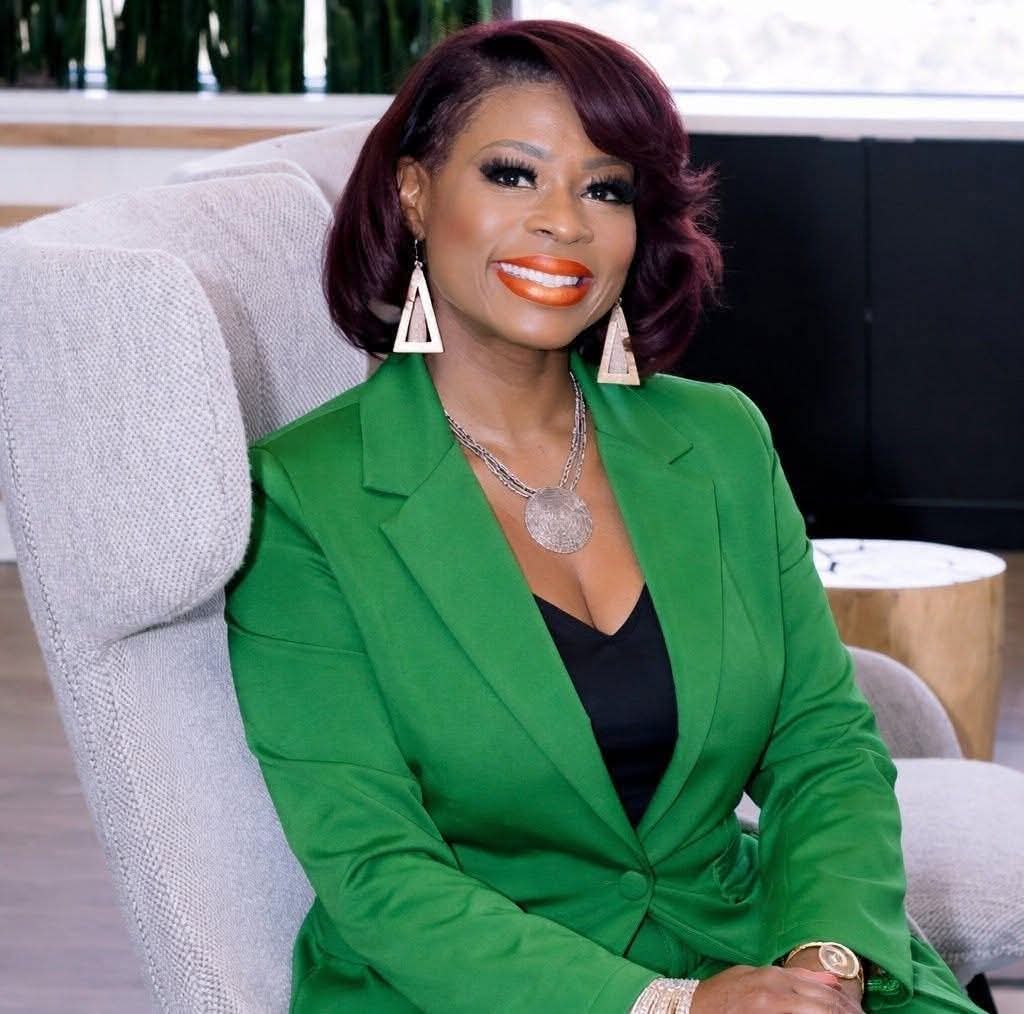
President and CEO of Big Brothers Big Sisters of Colorado
Elycia R. Cook is President and CEO of Big Brothers Big Sisters of Colorado, where she leads one of the state’s most recognized youth mentoring organizations and works to expand opportunity, connection, and pathways to success for young people and families across Colorado.
A seasoned nonprofit executive with more than 17 years of executive leadership experience, Elycia is known for bringing corporate, philanthropic, civic, and community partners together around issues of youth development, economic mobility, workforce opportunity, and stronger communities.
Since joining Big Brothers Big Sisters of Colorado in 2021, she has strengthened the organization’s reach, visibility, partnerships, and impact while championing the belief that talent exists everywhere, but access, relationships, exposure, and opportunity do not.
A nationally recognized speaker and community leader, Elycia has been honored as a Titan 100 Hall of Fame CEO and Denver Business Journal Most Admired CEO.
She brings both professional expertise and lived experience to conversations about how businesses, nonprofits, and communities can work together to create meaningful and sustainable opportunity.
While Elycia has had many professional accomplishments, she says her greatest successes and joy is being a mom to her two daughters and a mentor/Big to her Little Sister in the BBBSC program, Tay.


