
 RSS Feed
 Apple Podcasts
 Spotify
 Amazon Music
 Overcast
 Castro
 PocketCasts
 Navigating AI Communication Tells While Keeping Trust with Bailey Massey

Joined again by communication expert Bailey Massey, we discuss the challenges of navigating a world where AI increasingly encroaches on human activities. What happens when writing starts to sound a little too perfect? What happens when AI results do not meet expectations? How do we foster critical thinking skills when easy answers abound?
Luckily, this human conversation is here to deliver new takes on em-dashes, authenticity, and lists of three. Cristina, Alex, and Bailey explore how we can retain and even build on our humanity in an AI world.
Credits: Raechel Sherwood for Original Score Composition.
Links:
YouTube Channel: Uncover The Human
Linkedin: https://www.linkedin.com/company/wearesiamo
Instagram: https://www.instagram.com/wearesiamo/
Facebook: https://www.facebook.com/WeAreSiamo
Website: https://www.wearesiamo.com/
00:00 - Cold Open On Fear Of Mistakes
00:19 - Bailey Returns And The AI Question
02:20 - Spotting AI Writing Tells
06:25 - When Bots Write Our Messages
10:17 - Greed, Layoffs, And AI Pressure
16:27 - Voice Bots, Plumbers, And Trust
19:26 - Future-Proof Skills For Kids
29:55 - Communication, Community, And Boundaries
41:40 - Authenticity, Listening, And Healthy Errors
45:39 - Find Bailey And Stay In Touch
Alex Cullimore: Hello, Cristina.
Cristina Amigoni: Hello. It's Friday.
Alex Cullimore: It's Friday, or Wednesday if you're listening to this right when it gets released. Who knows?
Cristina Amigoni: Maybe there's a new day of the week that AI is going to come up and invent that we don't have that yet.
Alex Cullimore: All the days of the week are going to replace the Y with an I, so they all end in AI. Sundai. Mondai.
Cristina Amigoni: You know somebody's going to do that.
Alex Cullimore: That would be a pretty decent name for a calendar company that works with AI. Please, nobody take it.
Cristina Amigoni: It's ours.
Alex Cullimore: We just had a conversation with a repeat guest, Bailey Massey, who is always entertaining to talk to. But she's a great communicator. She works in communication and helping people communicate better, which is all the more necessary in the world of AI, which is exactly what we dug into it with her.
Cristina Amigoni: Mm-hmm. Yes, yes. Communicating with the world of AI, it's a whole new thing.
Alex Cullimore: Yes. Speaking with bots, we talked about plumbers. We talked about both the AI and non-AI sense and we talked about companies we talked about empathy. There's a number of great points in this conversation, and I just really appreciate her point of view in trying to help people deal with the world of AI and still be humans as we all are, and inevitably will be. Even if the asteroid hits, we will be human up to that point.
Cristina Amigoni: Yes, yes. Viruses are trying to do that, but there's a billion of us, so doing things for humans may be the smart way to do things.
Alex Cullimore: Welcome back to another episode of Uncover the Human. We have a return guest today. Welcome back to the podcast, Bailey Massey.
Bailey Massey: Thank you. Thank you. I'm excited to be here.
Cristina Amigoni: Yeah. Welcome back. Communication is still a thing.
Alex Cullimore: Is it?
Cristina Amigoni: It's still a thing that needs to be worked on, so there's plenty of topics to talk about with Bailey.
Bailey Massey: Absolutely.
Alex Cullimore: If you don't remember, Bailey works in communication, communication coaching, and one thing we were just discussing that's on everybody's minds currently is the impact of AI on how we're thinking, how we're communicating, and whether it's acceptable. “Are em dashes okay?” is the real question.
Bailey Massey: What do you think when you see them?
Cristina Amigoni: Yes. What do you think when you see them?
Bailey Massey: Because I know I see them, and I immediately go, “It's AI.” I no longer am like, “Wow, they really listened to English class.” It's now, “I need that.” That's terrible.
Alex Cullimore: I think it was a huge flag for me when people started using the word em dash. I was like, “Wow, I don't think anybody knew this one.”
Bailey Massey: Probably not.
Alex Cullimore: Didn't realize they knew it was called for the longest time, and then suddenly, it became just, oh, if you have it, it's AI. No, I did use to use those. No, I can't, otherwise I feel like I'm AI. I feel like we're in a reverse captcha world. We're all proving that we're not bots in our writing now.
Bailey Massey: Yeah, dumb it down a little bit, not too much, but just enough to not look like an overly robotic human.
Cristina Amigoni: Yeah. Use complete sentences, but don't use complete sentences. Finish your thoughts. That's another thing I've seen recently, about a telltale that you're using Claude is when you actually finish a thought in your sentence. I'm like, I always finish my thoughts in my sentences.
Bailey Massey: What?
Cristina Amigoni: I did way before Claude existed. But now I can't do it. Now I have to leave thoughts open, because if not, you used Claude.
Bailey Massey: Oh, my gosh. I hadn't heard that one. It's like, we went from, are people talking like they text now, or writing like they text, so if you actually use grammar?
Cristina Amigoni: Yeah, exactly. Which I do in my texts, too.
Bailey Massey: You're like, “I am very eloquent in every text.” I love it. Oh, my God. People must think I'm a full-on robot. That's terrible.
Alex Cullimore: Well, I love the more the AI takes of human writing, the more it's like, well, okay, but that is how you write. You do have to occasionally, I think, I mean, this personal preference, you do have to complete a thought occasionally. I'm biased.
Cristina Amigoni: I know.
Bailey Massey: It is. I'm right there with you. But now I'm like, maybe that is the problem. Maybe people aren't. Although that is part of what I coach people for, is their thought organization, their ability to wrap things up, and a common challenge is, I just don't know how to finish, and I just keep going and going and going. I guess, it does present. Man, it's really taking over. I don’t like it…I do like it. I like it for some things. I don't like that part of it, I should say.
Cristina Amigoni: Yes. Yes.
Alex Cullimore: What are the things that you guys notice as flags? I think I noticed rhythm is a huge one. It's all over LinkedIn now, and everybody has these two-line like, it wasn't this, it was this, it wasn't that, it was this. When you use that maybe once, it might be okay. Use that three times in a post, like okay, this was a bot.
Bailey Massey: Yeah. I'm trying to think the other things that I notice. The big one that I have a personal vendetta against is the listing of three things, because that is a preference of mine that I’ve had since I could write essays in school. I feel like that is a giveaway. That's one that I know other people identify, but I will not let it go. I will continue to do that. I do sometimes delete one of the examples, just to prove that I'm human.
Cristina Amigoni: What I find fascinating is the fact that the whole purpose, I think, Alex, you can correct me, but isn't the whole purpose of the large language model is to learn how to be more human in content creation. It learns. It's like, if we do these things, it's going to learn, and next time, it's going to do it. The AI is learning some things, maybe not others, but some things that, again, like we've said, em dashes, the list of three things, finishing a thought. All things that we've done as humans, and that's the purpose of the AI is to learn what we've done as humans, but now we can't use them, because then people can't trust us, because we use AI, but it's like, this is all reversed.
Bailey Massey: Yeah. You have to throw a mistake in there, have a misspelling, a random word. I don't know. Use a little tiny bit of what's the level of bad grammar we're using? Still, we’ve affected. Where does the balance happen? Oh, my gosh. Yeah, I don't know. I also feel like, people are using it more for everything in terms of things that they don't need it for. Your resume, or your cover letter for things, or even just basic emails. I know some people don't even write emails anymore. They just let whatever they're – what’s it, Gemini? Is that one of them that Microsoft had?
Cristina Amigoni: Gemini. Oh, Copilot.
Bailey Massey: Oh, yeah. That one.
Cristina Amigoni: Right. It’s Copilot.
Bailey Massey: Where they just have them respond. My whole focus is communication, and that teams need to collaborate and interact, because you need to be on the same page, consistent messaging, all of those things. If you don't even know what email you sent, because you just had whatever generate it, that's a problem.
Alex Cullimore: I think it's hilarious that we do things like that. At some point, we're just going to get a headline of a company that was sold to another company, because two bots were talking to each other and sign all the paperwork. Everybody's going to go to work one day and be like, “Oh, we don't have emails anymore. Our agent sold it.”
Bailey Massey: Didn't even realize.
Alex Cullimore: I think we're in an interesting time where, I think it's interesting that we seem to be at this uncanny valley portion of AI, where it's close to human sounding. There's some things look close. We don't often have the nine fingers in a picture generated from a person anymore. We're getting better at that. It's a little bit better at imitating humans to the point where we're now, like you said, Bailey, introducing bad grammar back into our emails just to try and sound like a human. We're at this spot where you can still tell, and it just doesn't seem to have a soul to it. There's something just not – It's close, but it's off. There's something noticeable, I think, in human. We notice like, this isn't it.
Bailey Massey: Yeah, I think that is the tone. It tries to sound, but we can't truly – a computer can't really do tone. It can try to sound as much as it can, but it doesn't have the vocal quality that we rely on and react to. Body language is out of the question. It has none. There's no gestures, there's no expression. I think that it's lacking, but we're depending on it as if it could, I guess? Well, no.
Alex Cullimore: I think, I'm curious about from your point of view, Bailey. And Cristina and I have seen this a little bit in our work too, but Bailey, you have – the communication end of things. I think people, there's a weird adamancy that everybody has to adopt AI. That, oh, you're going to fall behind, you're not here. You haven't done it. Everybody's just going to have to get over it and do it. I feel like, when we say things like, advocate for human, you would say, or the human thought, or communication, or body language. Sometimes it sounds like, because there's such an adamant group of people telling us that it has to be AI, it sounds almost we're justifying the fact that we have to communicate. I think that we've really missed the point of communication in the first place, which was that's how we connect. That's how we actually express things. That's how anything gets done. That's how we express and actually communicate anything to one another. We can't have that connection if we don't do this in a more human way. You can't just have your auto responder bot doing it all. I think that we're missing, it's not just that an email was responded, we're missing the actual intangible of the email, intangible of the communication.
Bailey Massey: Yeah, I agree. It's funny you say that, because years ago, I had a client who worked for Google and was on their, whatever their AI thing was.
Cristina Amigoni: Gemini.
Bailey Massey: ChatGPT. Whatever it is.
Alex Cullimore: I think it's Gemini. Something. Yeah.
Bailey Massey: He had said something so interesting. He talked about how people need to learn how to understand it and regulate it. But he was like, “It's language, it's communication, it's patterns.” He's like, “I would love to find a way to create a way to communicate with our animals, our pets.” I was like, “Okay, yes. Do that.” Good for you that that's such a connection-focused perspective. But that's not at all the direction that we're in. Now it's just like, how can we do things faster? I actually saw a post somewhere this morning about how corporations and technology developers have recognized that they've met the cap of what they can use people for? Now it's like, okay, well, we've used them up. Let's find something else. It feels gross.
Cristina Amigoni: I don't understand.
Bailey Massey: I want to talk to the dogs.
Cristina Amigoni: Yes. They probably don't want to talk to us, but yes.
Bailey Massey: True. My dog would love it.
Cristina Amigoni: I know. All the animals are out there looking at this and thinking like, you guys have no idea how to do this life thing. It's like, I don’t know what you're doing, but we're still going to be here when you all implode and no longer exist.
Bailey Massey: Right. How to do this life thing. That's so funny.
Alex Cullimore: I don't understand the narrative of we've used up the people. I've seen it. We're now at the end like, we're reaching the people capacity and we can move beyond people. First of all, nothing that I've seen would suggest that. Secondly, why is that the goal? Thirdly, again, we just aren't there. Even if you could do it, shouldn't we have some consideration for us as, I don't know, people about what our future should look like?
Cristina Amigoni: Yourself? I mean, you've confused – Unless, you just turn into a bot, you've just eliminated yourself, right? You've used up all the people. We're done with the people who graduated humanness.
Alex Cullimore: Move the tassel over. We're done.
Cristina Amigoni: That’s include you who are making the decision. You will be replaced as well if you go down this path.
Bailey Massey: Yeah. Well, and with that one, it doesn't seem like we're thinking of the future period, but it's just very right now.
Alex Cullimore: Yeah, that's fair.
Bailey Massey: What everybody talks about, what are AI safe careers, or positions? Any of them could be. They were headed that way. Why are we trying to force it into everything?
Cristina Amigoni: Speaking of AI safe careers, I had an ultrasound yesterday. The whole time, I was like, I am so glad I'm doing this with a human. I hope I'm not around when this becomes a robot, because there’s no freaking way I'm getting an ultrasound with a robot.
Bailey Massey: Oh, man.
Cristina Amigoni: I was so grateful to actually be with humans.
Bailey Massey: Yeah. Well, and I feel like, especially with a lot of medical things, even if it's routine stuff, or, for example, when I was pregnant, having an ultrasound, you want to ask questions and be like, “What does that mean?” And have somebody's genuine response come to you, as opposed to, “This is normal, abnormal.” That would be terrible. Oh, that's so interesting.
Alex Cullimore: It's hilarious, but horrifying mental image of a robot voice being like, “This is going to be a little pinch.”
Cristina Amigoni: Yes, exactly.
Alex Cullimore: Oh. Oh, God.
Cristina Amigoni: You're going to feel a little pressure.
Bailey Massey: I was listening to a news story that they now have robotic massage therapists in Denver at a place. They also have humans, but they have introduced these machines that you can customize to the type of massage, the intensity, all those things. They said that it is really appreciated for people who have any trauma, or have injuries, but don't want to be touched. It's like, okay, I get that. There's a benefit. But I feel like we take the sliver of benefit and necessity and pow, make it.
Cristina Amigoni: Then it becomes a norm. Now everybody gets robot masseuses, which I'm sorry, but there's a sharp image to that for 25 years with the little pillows that you're putting on your neck and it's got the balls moving around. We didn't need AI for that. They were really tried, and they've shut down all their stores.
Bailey Massey: There's that. Yeah.
Alex Cullimore: The cautionary tale. I think that's exactly it, Bailey, because it's not that there aren't use cases. There are plenty of use cases. It just doesn't have to be everything, because as we've seen with Salesforce having to go sheepishly come back out and be like, “Hey, we shouldn't have laid off 4,000 people. It actually hurt a lot of customer trust. We couldn't replace this.” Maybe there was a use case, but you didn't even test it and then you rushed ahead and you assumed it was going to do everything? I don't understand the fervor to try. Experimentation, great. Go try and see if it can do things. The immediate belief that it can do it all and that we should replace everything that already existed is wild. It's so fast, and so destructive.
Bailey Massey: I feel like, that's just greed, isn't it?
Alex Cullimore: Feels like it.
Bailey Massey: How can we make more money? Not care about the people that have been here.
Alex Cullimore: Look how much we're saving on our P&L.
Cristina Amigoni: It's greed that will get you to, yeah, exactly. Well, and I was talking about this with Abbay on our team yesterday. I can't remember why the topic came up, but it was really about all the layoffs. Meta just did another 8,000, where they told everybody, “Stay home. Work from home a week,” so that they could lay them off with an email at 4 am, which, I mean, that should just be criminal. But it is in China. But it is criminal in other places.
Alex Cullimore: A robot comes and arrests you, which really just puts the cherry on top.
Cristina Amigoni: Yeah. Part of what I think the problem is that you've got a stock market that rewards this.
Bailey Massey: It’s a good point.
Cristina Amigoni: It's like, if the stock market stopped rewarding layoffs, these layoffs would not be happening, because it is greed and everybody's trying to get more money and more power, God knows to do what with it. You still have only two hands and two feet. Can we take the reward out of these things? Because even if just the stock market reward of layoffs to the P&L would change, you would probably see a lot less companies doing layoffs.
Bailey Massey: Yeah. How do we make that happen? Who do we talk to?
Cristina Amigoni: The dinosaurs figure out which asteroid hit the earth and start it over again.
Alex Cullimore: We called the AI bots that are now screening calls for our representatives and tell them about this. I had a weird experience. I called a plumber for something this week and I got put to – it was an AI bot, but it was very much trying to sound human, to the point where not only was it just, it sounded like a human and answered as if it was a human. It also, they had put in background noise, so it sounded like this was a person in a call center. I was like, what are we doing here? How is that better? It's so much more confusing. I was like, is this a person? Is this not a person? Also, why is there a call center at my plumber? Why? It's one person.
Cristina Amigoni: Sorry, I’m answering the plumbers.
Alex Cullimore: Do you have 12 people out there to switchboard for how many plumbing call? It was insane and it was very disconcerting, because it was fairly clear it was not a bot, but it was a pretty good imitation of a voice, so I kept being like, “Am I talking to a human, or am I not?” Which threw me off from just saying like, “Oh, my toilet's broken.” It really just tossed the entire message out the window.
Bailey Massey: Well, and that must be how the elderly are completely taken advantage of so many times. It's hard. It's not just pictures that you have to second guess. Now, it's audio. That's terrible. Oh, my gosh. I get probably one or two job postings a week from LinkedIn for voice. How do they describe it? I should look and see. It's just a voice coach for AI, where they're like, “Oh, based on your experience, you would be great for this role,” to basically give feedback to that plumbing AI representative to say, “Oh, their pitch needs to go here. Their tone needs to go here,” to try to customize it to make it more in-line. Because I had originally seen it and thought it was a voiceover interview job. I had sent it to a friend who does voiceover and she's like, “Oh, yeah. I definitely don't want to support AI taking my job.” I was like, “What do you mean?” Then she told me what, I was like, “Oh, that's what that is. I'm so sorry. That's terrible.” That's a whole thing that somebody is getting paid probably more than I get paid to do, or a robot. No.
Alex Cullimore: Eventually, so that robot can talk to another robot, but they'll have perfect tone with each other.
Cristina Amigoni: Yes. They'll be able to fake being a human to another robot.
Bailey Massey: Yes. Oh, my gosh.
Alex Cullimore: Robots writing emails back and forth to each other being like, wait, is this robot using an em dash?
Cristina Amigoni: I know.
Bailey Massey: Per my last email. Attitude in there.
Cristina Amigoni: Yes.
Alex Cullimore: Have our data centers crashing by auto responders just flying back and forth.
Bailey Massey: That's getting really frustrated.
Cristina Amigoni: When she goes back to like, what's the point? Where's that future finish line, if all we're doing is trying to replace humans? Okay. Then, what are the humans going to do?
Alex Cullimore: Yeah. Why does nobody seem to care?
Cristina Amigoni: Why does nobody seem to care?
Alex Cullimore: There's a lot of us.
Bailey Massey: I remember years ago, let’s see, my son's eight and a half, so it must have been eight or nine years ago. I was listening to a news story. It was all about how kids entering kindergarten today, the careers that they will have, the jobs that they will have when they graduate don't even exist yet. My kid wasn't even born at that point. I remember being like, “Oh, my gosh. What does that even mean? How do we prepare them?” Now we're also in this new situation where it's like, the careers don't exist, but also, AI is going to do all the things. But then, there also needs to be somebody who operates and is the thinker. What do we do for kids? How do we prepare them? Is it coding? No. I don't know. Maybe. Just no idea.
Alex Cullimore: A couple of things come to mind. I'm just going to brainstorm here, because this has been on my mind a lot of like, what are we supposed to do and how are we supposed to prepare? I think if they're going to keep trying to replace all people, then there's a paradigm shift about what is the value of being alive and working and contributing? Instead of it just being, okay, now we're going to sign things, like health care to a job. Remember, we're going to have to make sure that everybody – you have employment, or you're suffering. Well, if there's not that much employment to go around, but we still have a lot of people, then we need to rethink what it means to contribute. Then, I think, there is definitely value in what you're talking about, just trying to learn to be the thinker. Can you be the person who can actually evaluate these things? Because that's what you're going to have to do anyway, even if you're not doing that for a job, you're going to have to do that in every piece of your life. What are politicians saying? What is this bot emailing me about? Is it a bot that's emailing me? All of that critical thinking is going to become incredibly important. That will be important, whatever career exists. I mean, we're all in a podcast now. None of that existed when we were in high school. None of that is when we were all going through and trying to create careers. But the ability to think about, hey, what does this mean? If this is a form of medium, how can we use this? Training people to think and think about what's worth doing would be a huge benefit, instead of just thinking about what's a profitable career and what's going to allow you to live a stable life? Because we've proven that we don't seem to care about stability, and we're fine with throwing it over if a convenient for a few people. What do we actually focus on? How do we help ourselves and help each other not be consumed by that?
Bailey Massey: Yeah. Maybe it's those transferable skills that really need to be, instead of go to this tech school program, it’s like, go to this critical thinking, communication, interpersonal awareness program, because that can apply to everything.
Cristina Amigoni: Yes. Learn how to communicate to other humans, because there's still eight billion of them.
Bailey Massey: I don't know. It solves all these problems, if people would listen to us, I'm sure.
Cristina Amigoni: Yeah, exactly. Right. We definitely could.
Alex Cullimore: As long as this gets shared far and wide.
Cristina Amigoni: Yes. Well, we've already advertised Copilot and Gemini. Some bot is probably going to pick this up in some way.
Bailey Massey: Right? Yeah, they're going to – a little radar goes off.
Cristina Amigoni: Yes.
Alex Cullimore: I think we are in an interesting point of transition. This is something that was talked to. I've seen it discussed in the how quickly technology changes in general, because even before AI, we've found through a number of huge shifts, things like social media came out and that changed how we interact in ways we promote things, ways we communicate, ways we connect with each other. Those were all very, very different. It takes us a little while to inoculate ourselves, for lack of a better term, to the effects of that and figure out how we're going to use it well. That's definitely, I think, going to be somewhat true with AI, where we were figuring out what's going to be valuable and not. There's a period of transition that is extremely worrisome, and it causes everybody this much stress and it throws so many jobs for a loop and throws people into this wonder of, will I be able to find any work again if I lose a job? What am I doing right now in my job that's going to threaten what I can do later? If we don't start to solve some of those problems, I don't see how we regain some of the stability, because this is – we've all seen a transition like this, but this was really fast and particularly widespread.
Bailey Massey: Yeah. I'm assuming for what you guys do within organizations to help them pump the brakes a little bit is a huge part of it in order to not just go, go, go, go, go, climb, climb, climb constantly, because that requires pause for that to even be possible, I would think.
Alex Cullimore: Which ironically ends up being the same advice we have giving most of the time, which is, hey, have we really considered why we're making this change? Even before it was AI, it was just, hey, why are we doing this? What are the things? How are we going to know that we're being successful at this? You can apply exactly those thoughts to AI. Why do we want to include AI? What do we hope to get out of this? How can we make sure we're actually moving towards that, or reaching something where we’re like, actually, this isn't going to do what we thought it was. Let's change course. All of these are standard, critical thinking tools.
This is why I go back to that, I love that critical thinking academy that you suggested, Bailey, because I think you have to have those things. We are finding ourselves giving the same advice, but like you said, it's pumping the brakes, but because this is this weird hyper accelerator, it's hard to pump the brakes. You have to have a much stronger brake now.
Bailey Massey: Yeah. You're fighting against tons of other people who are like, “No, no, no, we need more, more, more.” Don't let anything slow down a second.
Cristina Amigoni: Yes.
Alex Cullimore: If you do, you'll fall behind. Then you’re like, dramatic consequences, so you got to keep pushing, even though none of us have any idea where we're going.
Cristina Amigoni: Nobody knows where the consequences are, by the way.
Alex Cullimore: We don't know what they are, but they're here.
Cristina Amigoni: We don't know what they are, but they're drastic and they're dramatic. Nobody knows where the consequences are.
Bailey Massey: Oh, my gosh. Yeah. I feel like, I get that with a lot of just individual professionals that I work with, where they have so much pressure on themselves that it's unrealistic. I get why, because that's the message that's being pumped down onto them. They're very concerned about their performance and the metrics, all the things. But then they also, it's like, what happens if you make a mistake? What happens if you don't meet that? When things are out of your control? I don't know, but I'm so scared to find out, and there's no calm. We're just so anxious and just going a million miles an hour in every direction at the same time.
Alex Cullimore: For millennia, we have had the phrase “To err is human.” Yet, we just can't accept it. We don't accept it at work. We don't accept it of ourselves. We believe we have to do all things perfectly. I'm just as guilty of this as anybody. It's so much pressure to feel like, “Oh, I can't make a mistake. I can't look like I made a mistake. It's insane how imperfect we all inevitably are, and yet, how high the expectation is to pretend like that's not the case.
Cristina Amigoni: Except when we write, then we do insert mistakes, so that we can feel like we're humans. We can look like humans, because we are humans. We can hopefully, establish some trust by making mistakes when we actually didn't make them.
Bailey Massey: Is AI helping us be more human? Because it's encouraging us to dumb down and make mistakes and be okay with it.
Alex Cullimore: I think there's absolutely that opportunity.
Cristina Amigoni: Yes. I think there's definitely opportunity.
Alex Cullimore: That's why I stopped organizing my thoughts.
Cristina Amigoni: Yes. Maybe we can finally embrace it to err as human.
Bailey Massey: There you go.
Cristina Amigoni: Okay. Let's just err all the time. Even when we don't want to do it.
Bailey Massey: So funny.
Alex Cullimore: I drive my car straight into every Waymo.
Bailey Massey: Oh, I'm still glad those are not – those aren't Denver, are they?
Cristina Amigoni: I don't think so.
Alex Cullimore: There's a couple of them. I've seen a couple downtown. Yeah.
Cristina Amigoni: Oh, there's a couple of them?
Bailey Massey: I know there's lots in LA, but I haven't seen many locally, and I'm grateful for that, because they make me so nervous.
Alex Cullimore: Yeah. There's something really disconcerting about looking over and seeing a car move on a road with nobody in it.
Bailey Massey: My car has autopilot. I'm too scared to – I tested it once for 30 seconds. I was like, “Okay, I'm good. It does it. Cool.” No, never again. It's just, I don't know. Maybe it's my control issues. Who knows?
Alex Cullimore: I agree. It's worrisome. It's hard to let go of. I was driving down Floyd Hill, that really steep part of going up to the mountains on I-70 there. I was passed on the left by a Tesla that was filled with what looked maybe 14-year-olds all on their phones, nobody at the wheel. I was like, “What was happening? I don't think anybody could even save this car if it needed somebody.”
Bailey Massey: Wow.
Alex Cullimore: This is worse than nobody being in there.
Cristina Amigoni: Yes. Especially, because Floyd Hill is under construction. It's not a normal traffic pattern right now. Well, it hasn't been for 10 years and it's been under construction for those 10 years, but that is scary. That is very scary.
Alex Cullimore: That was scary.
Bailey Massey: No, thank you. I don't like it. I don't like it at all.
Cristina Amigoni: No. No.
Alex Cullimore: AI has been really efficient at raising my cortisol, is what I'm saying. It's doing it faster than almost anything else. I got to appreciate it for that.
Cristina Amigoni: You've got velocity. There you go.
Alex Cullimore: The velocity of the blood flying through my veins.
Bailey Massey: Oh, my goodness. Yeah. I don't know. I'm avoiding it as much as possible. But also using it as much as I need it at the same time. It's not like, absolutely not. I still use it quite a bit, but with critical thinking.
Alex Cullimore: There was a ChatGPT outage a couple weeks back and suddenly, everybody was like, “I don't know what to do.” Guys, we haven't had AI that long. What do you mean you don't know what to do?
Cristina Amigoni: Do what you used to do two weeks ago.
Bailey Massey: Yeah. Oh, I saw a post today. Somebody had said that they can't believe that any of us wrote 10 page papers in college without it. It’s like, yeah, we did. Half the time we did it the night before. We just cranked it out and made it happen. That has to be a skill that an entire generation is never going to have. Whether it's the perseverance, or focus. I don't know. Something that allowed us to just get it done.
Cristina Amigoni: Yeah. With paper and pen, not even being able to type, and then they'll white out. I’m like, “Oh, made a mistake. Got to white it out.”
Bailey Massey: I had to explain what that was to my son recently, because it's a roller one. I have to write things down. Just old habits die hard. He was like, “Well, what's that for?” “Oh, so you can cover it up and then rewrite.” He was fascinated by it, because he just – yes, he writes at school, of course, but delete, delete, delete. That's how you do formal things. Not so much.
Cristina Amigoni: Yeah. How do we bring communication back into fashion? Non-bot communication. Human communication. Human to human communication.
Bailey Massey: Are you thinking text-based, or verbal, or both?
Cristina Amigoni: All of it. One of the things that I appreciate, one of my favorite ads right now is from Chase. I don't know if you guys have seen the latest Chase ads. They actually show all these things where robots and AI has taken over. This guy that's just like, I don't want a robot making my latte. I don't want this. I don't want that. Then Chase saying, “Come to us. We're going to have humans greeting you and you speak to a human and you interact with a human the whole time.” It's so brilliant, because I think that's what people are craving is I just want a human. I called 1-800 contacts yesterday, because I bought a frame and it didn't work out. I never call. I usually send emails. They picked up so fast that I thought it was a bot. I'm like, “Oh, wow. This Adam guy really sounds human.” This was way faster than I expected to be. I didn't have to press 15 buttons to even get to a human, so it's got to be a bot. But then as he was talking, I'm like, “No, no. He's human. This is fascinating.” I was on the phone with him for 20 minutes. It was so nice.
Bailey Massey: Wow, because you do automatically assume. It reminds me of a similar issue. In terms of the communication, how do we bring that back? It reminds me of a conversation I had recently, where talking about just community and how community is so important, but nobody really has the accountability to follow through on things. She had said, “Everybody wants a village, but nobody wants to be a villager.” I was like, “That is fantastic. I will never forget that now.” I think that that also relates to the idea of we crave and want communication for the most part, but we also, whether it's because we're stressed, we're tired, we're overworked, we go for simplicity. Is it easier to just send a text? Is it easier to do the email, especially if people are working up til 1 in the morning and you can't call somebody? Is it because we have literally no boundaries, or guardrails on anything anymore that we're actually being better to not call the person at midnight? I don't know. I don't know how to force that, or make people know that it's important.
Alex Cullimore: No, that's a good point. I think that some of it when the ship drives enough into the iceberg will happen by default. We’ll have to figure out what we do next when things aren't working out. I think that's part of what people are feeling. I like that sentence, everybody wants a village, but nobody wants to be a villager. I think there's a huge part of that. That to me sounds like more of the education about, what does it mean to be in a village? There's definitely, we ran rampant without boundaries. We're now resetting boundaries. There's lots of talk about Gen Z's really strong on what they're going to do and what they're not going to do, which is I think a good change of pace and it's causing a lot of frustration still. Finding that balance then. To equate it to my own therapy journey and the one that I've seen from a few people, there's a lot of understanding what boundaries are. Realizing you don't have them, don't have enough of them, maybe going too far and creating them and then figuring out what the balance is over time. Maybe everybody starts in a different part of that spectrum. I think there's going to be a learning curve and there's going to be a lot of room for education. It's just a question of how to get people to step in and want that education and find it.
Bailey Massey: Yeah, that pendulum swing. Well, and bringing it back to AI. I've had many friends who have done the full swing, where I am terrified of it. I want nothing to do with it. It's horrible. Don't use it at all. Then all of a sudden, they experiment with it and then they're like, “Aah.” Then they use it for everything all the time. It just goes from being like, “Mm-mm. Never going to do it.” To, and I can't think without it. It's like, how do we stop the extremes? Can we just exist in the gray area a little bit?
Cristina Amigoni: Yes, yeah. Yeah, the gray area is a good point, because I use it. Whenever there's a new technology, I don't really resist. When the Internet came out, when email came out and cellphones came out, there was no resistance, there was curiosity. I find that it is true. You get these extreme spectrums of like, “No, I'm never going to use that.” I had huge argument with my father, actually, who used to work for a technology company in 1996, or 1997. I think it was 1996 when the Internet was starting to take hold and everybody started getting emails. It was still, I mean, we're talking about Windows 3.1 was the operating system. a long time ago.
Alex Cullimore: You had to use your phone wire to get in.
Cristina Amigoni: Exactly. Exactly. You had to go through the whole fax sounding machine to even get on the Internet. It was him and his colleagues and they were like, “No, no, no. It's just a phase. It's just a phase. It's going to go away.” I'm like, this is not a phase. This is not going to go away. It's hard when you have those extremes of like, “I'm going to do everything with it. I'm going to do nothing with it.” Because if you think about it from, let's say, even horses and cars point of view. Yeah, good luck riding a horse when the whole world is driving cars. Or maybe don't go to the extreme of getting in your car when you have to go and see the next-door neighbor that's 10 feet away. Find the gray area.
Bailey Massey: I think, you mentioned in the very beginning of that the curiosity. I feel like, curiosity is what is required to think critically. It's also all the way back to the question that you ask your clients and the companies you work with, why? Think about the why. Maybe we've stopped asking why, because outsourced our thinking.
Alex Cullimore: I do – I agree that curiosity is a great one to start with, because curiosity also implies the openness to not keeping it. One of the things that I think is going wrong is people are like, “We're going to adopt AI.” Then it becomes this forced like, you're going to do it for everything. It's not just staying curious to, is this helping with this and being wrong on some of them. Some of them you'll be right, and some of them you’ll be pleasantly surprised. Like, “Oh, actually, this resolved something that I really didn't enjoy, and this helps a lot.” Just move past that. On other things, you might be like, “I was hoping you would do that, but it's just not quite there. I'll stay open to it in the future, but I don't have to try and force it now.” There's something important about that open mindset of, “I'm going to test it out, but I can also let it go.” You're not then attached to, “I'm going to make this happen at any cost.” Or, “I will resist it at every cost.”
Bailey Massey: Yeah, that's true. It's that balance. It's finding the middle ground. Yeah. I think we're all scared to live there. It's like, “Oh, my gosh. What am I going to miss if I don't go to the extreme and delete all my boundaries completely?” Yeah. No.
Alex Cullimore: I remember reading something semi-recently talking about things like favorite colors and favorite clothes, stuff like favorite, whatever. It's something that we – a lot of us have favorites of things, favorite foods, favorite whatever. Ultimately, it's rarely the ultimate preference that we have. It's just a mental shortcut. Maybe this world of extremes is somewhat because it's hard to make that decision over and over again of, is this working out? It's a lot easier to be like, “I will do this at all times, or I will not do this at any time.” If you only have the black and white, then you don't have to go revisit and recalibrate yourself. There's a lot of mental effort that goes into that, which again, goes back to the value of learning how to critically think, so that that becomes more of a default and a little easier and a little less taxing, so that it doesn't become something where you feel like you have to live in the black and white. You feel like you can have some of that, right? Because it's not overwhelming to have to reassess all the time.
Bailey Massey: Yeah. We're looking for the easy way, the habit that requires no thinking, no effort. It's like when you go to a restaurant, you get the same thing almost every single time. Just it's so hard to read the menu and see if you might like something else. It could be as simple as that. We're just such creatures of habit that we have bad habits presented to us, and then we get stuck. Got to break them.
Cristina Amigoni: Yes. Yup, definitely got to break them. Yeah, and we abandon the old habits. We pick new ones up, we abandon the old ones, and we can't decide when is the old one the right one for the situation, versus the new one? It's like, it's this black and white, it's these extremes. I'm going to either work 12 hours a day, or I'm going to work two. I'm like, what about something in the middle maybe? I don't know.
Bailey Massey: Why do we think that the old habits, just because we got away from them are necessarily bad? I feel like, the view that they're less than, where they probably – some of them maybe, sure, but not all of them.
Cristina Amigoni: Mm-hmm. Yeah.
Alex Cullimore: I was just reading a book on economics and how that world changes. This was written before AI, but it was talking about how a lot of America, particularly in some of the UK, once there were things like knowledge industries and Internet work, there was this feeling of like, “Oh, we don't really need manufacturing anymore.” We'll invest our entire economy into basically, an economy of ideas. It's hilarious, they can retrospect. You can see how it would just happen generally. It's not like it was a memorandum of we'll never manufacture again. But the emphasis was on anything that wasn't hard in manufacturing, which is hilarious as we all live in manufactured buildings with manufactured things. We all only create these. There's clearly –
Cristina Amigoni: I know. How are you going to manufacture things?
Alex Cullimore: Yeah. Well, the idea was we can outsource all that, and that's not a worthwhile industry. It's being proven now, obviously that that's not really a great economic model. You do need some of those things and you can't just build on ideas that also require somebody else to do manufacturing a bunch of stuff anyway. Somebody else is going to get the reward of that is in global politics. There's going to be some move there. I think there's something to be said for that idea of, yes, their old habits might not always be necessary, or might not be as necessary, but it doesn't mean they're gone. Or it doesn't mean there isn't a place for them, or a use in knowing them.
Bailey Massey: Yeah. It's also what we choose to value, because going back to your plumber situation, the trades, the trades for so long we’re down on in a way where it's like, no, you don't want to go into any of the trades. You want to do something else. Now we're also realizing that, oh, shit, we need trades people to do that.
Cristina Amigoni: That toilet is not going to flush itself and stay working.
Bailey Massey: Yeah.
Alex Cullimore: This light doesn't turn on, and I have no idea what to do about that.
Bailey Massey: Exactly. It's like, how do we – maybe that just goes back to the extreme again, where it's like, recognizing we still need a little bit of everything. Just, nope. Just look forward. Don't even look at the other things until you're like, “Oh, shoot. Now I have to pay a million dollars just to get my electricity fixed, or whatever. It's so expensive.” We create our own problems.
Cristina Amigoni: Yeah. We're definitely good at that.
Alex Cullimore: Take that one from us, AI. See if you can create more problems faster than we can.
Cristina Amigoni: Oh, it definitely does. But yeah, this promise of what I was, oh, I was writing yesterday a recommendation for a client who wanted a recommendation. All I wanted was to check the number of characters, because there was a character limit. Every single time I tried to put this recommendation in the form, it kept telling me like, “No, you're over by a 100 characters.” I kept putting that, I don't know why I did not put it in Word document. I should have just done that. I was so used to, I had Claude open, or ChatGPT open. I just kept putting it in, I think it was Claude. Put it in there. I’m like, okay, show me how many characters is this. Still too many. I would break it down, put it back in the form, thinking I've got it. I've counted how many characters I've taken off, and it would still be over. I'm like, “Oh, my God. It can’t count. Claude cannot count characters. This is what the problem is.”
Bailey Massey: Oh, yeah. I love seeing all the mistakes that it does make.
Cristina Amigoni: Yes. Yes.
Bailey Massey: Was it strawberry? I think you're the one that told me about strawberry.
Alex Cullimore: How many r’s are in strawberry?
Bailey Massey: The spelling of it. Whereas like, how do you spell the r’s, or something? The insistence on being correct for so many things.
Cristina Amigoni: I know.
Bailey Massey: If you don't question it, you believe it.
Cristina Amigoni: You just go with it. Yeah, it's crazy. What's a communication habit that you would like to see back from the past?
Alex Cullimore: Lists of three things.
Bailey Massey: Yes, absolutely.
Cristina Amigoni: Yes, yes.
Bailey Massey: Three things. I'm going to give you three things.
Cristina Amigoni: Yes. In complete sentences with em dashes, please.
Bailey Massey: Should I pause really long, so you know it’s an em dash?
Cristina Amigoni: Yes.
Alex Cullimore: Yeah, we need to know when the em dash is.
Bailey Massey: Right. I think I would like to see personal communication brought back into things and not deep personal, but just human connection of “how are you?” reading another person a little bit and just taking a little bit of time before jumping right into that. I would like to see listening and waiting. Not going full speed and rushing into things, but taking a little bit more time. Then I think the last thing I would to see, because I'm forcing myself to think of a third thing, because my brain needs that, is to be okay with mistakes, I think, would be the thing. Because I think we get so hooked up on them and one, nobody's paying attention that much anyways. You make a mistake. If you just keep going, nobody remembers. I think the idea of perfection and the false appearance of perfection that maybe is partly due to AI, I don't know, is a problem. If we could just let some of that go and to err is – do more of that.
Alex Cullimore: I like all three of those. That's great.
Cristina Amigoni: Yeah, those are great. We know we asked you last time, but authenticity changes. What's your definition of authenticity in this new world of chaos?
Alex Cullimore: Dashes in list of three. It's the most authentic three you can have.
Cristina Amigoni: Exactly.
Bailey Massey: Oh, authenticity right now is, I think mistakes. I think mistakes is where it is. Not the purposeful ones that you force into the edit of your AI stuff, but mistakes in the taking the pressure off, because I feel I would perfect say on avoiding everything. Then I'd be more in my head for things. I feel like there's a lot of learning that can come from it, for myself, but also for whoever it is that I'm speaking with. If I have to pull that internal monologue out for a second and talk through it, I think it benefits everybody, because then the processing and the thinking is visual, because I don't think we see thinking, or processing occurring much.
Cristina Amigoni: Yeah. I like that a lot. I recently listened to a podcast that talked about listening, because it was one of your things. One way to slow down when you're listening to somebody speak is to actually start creating a movie in your head of what they're saying, so that you have a movie. You now have a movie. Now you're so focused on trying to get the movie to come up that you don't want to rush in and interrupt, because what's the movie happening?
Bailey Massey: I'm trying to see it.
Cristina Amigoni: Whether they do that and what's next and what's next in the movie?
Bailey Massey: Well, that's so interesting. Yeah, I like that. We should all do more of that. That would help with empathy, too.
Cristina Amigoni: Yes.
Bailey Massey: Quite a bit. Another thing we're lacking.
Alex Cullimore: Maybe we can train AI models to think about a movie while they're coming up with their LLM, so that finally we don't have to do that anymore.
Bailey Massey: Right.
Cristina Amigoni: Who can use empathy? You get all sorts of empathy from all the AI.
Bailey Massey: No, thank you.
Cristina Amigoni: It's funny, because I've actually had to in the brainstorming phases of using AI. I've actually had to say it out loud. I like to say it out loud. I've had to actually type it and I'm like, do not agree with me. You're not here to agree with me. You're here to help me think through all the angles that I'm not thinking about, because there is that tendency.
Alex Cullimore: Then it says “That's a great point. I will try not to agree with you.”
Cristina Amigoni: Yeah. Exactly.
Bailey Massey: It's really good at not pushing back and just having an idea. I think that that can create a whole other spiral of problems, because people are just a whole bunch of yes men.
Cristina Amigoni: Yes. Yeah. Well, thank you, Bailey. Where can people find you for real communication?
Bailey Massey: Yes. I am on all the social media things as Bailey Massey Global. You can find me on my website, baileymasseyglobal.com and reach out. Even just send a DM, or something. It's always fun to have people just communicate. Do not send me an AI message though, because it's going to bug me. Be real. Make mistakes.
Cristina Amigoni: Yes. Put those em dashes in, three points, full sentences with a few mistakes.
Bailey Massey: Yes.
Alex Cullimore: Four things you'd like to ask, Bailey, so it doesn't sound like an AI.
Bailey Massey: There you go. Yes. Or really, switch it up and just do one and then my mind will explode.
Cristina Amigoni: Well, thank you so much.
Bailey Massey: And thank you.
Alex Cullimore: Yes, thank you, Bailey. Thanks everyone for listening.
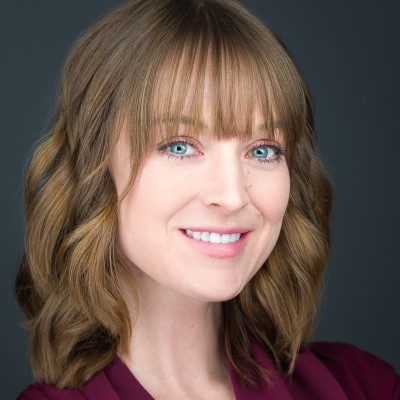
Founder/Communication Expert
Bailey Massey, the founder of Bailey Massey Global, brings over 15 years of expertise in speech therapy, speech and communication training, accent and dialect coaching, and corporate communication enhancement. With a Bachelor’s degree in Speech and Hearing Science and Psychology and a Master’s in Communication Disorders, Bailey’s comprehensive education and hands-on experience across industries enable a personalized and effective coaching approach. She excels in tailoring interactive training to meet the unique needs of organizations and professionals, focusing on areas like effective communication, speech clarity, voice control, public speaking, and leadership using neuroscience and research-based methods designed to achieve improvements in communication.


