
 RSS Feed
 Apple Podcasts
 Spotify
 Amazon Music
 Overcast
 Castro
 PocketCasts
 Purpose-Led Marketing and Leadership with Peter Georgariou

In this episode of Uncover the Human, hosts Alex Cullimore and Cristina Amigoni sit down with Peter Georgariou, CEO of Karmadharma — a B-corp agency in Canada blending strategy, marketing, and people and culture work. Peter shares the winding path that led him to build a company grounded in his core belief that putting good into the world and helping people find their own path are the highest callings in business. From weekly gratitude check-ins with his team to resisting the pressure of vanity KPIs, Peter makes a compelling case that the "soft" stuff — presence, compassion, vulnerability — is actually the hardest and most important work any leader can do.
The conversation digs into why the best consultants and coaches ask better questions rather than offer ready-made answers, why human connection can't be measured on a dashboard, and how radical transparency from a leader can be the most liberating gift a team receives. Whether you're a founder wrestling with self-doubt, a people leader trying to justify culture investments, or just someone curious about living more authentically, this episode is a refreshingly honest and energizing reminder that the messiness of humanity is where all the good stuff happens.
Credits: Raechel Sherwood for Original Score Composition.
Links:
YouTube Channel: Uncover The Human
Linkedin: https://www.linkedin.com/company/wearesiamo
Instagram: https://www.instagram.com/wearesiamo/
Facebook: https://www.facebook.com/WeAreSiamo
Website: https://www.wearesiamo.com/
00:00 - Coaching As Guidance Not Answers
01:14 - Meet Peter And Karma Dharma
05:14 - Gratitude Meetings And Culture Anchors
10:16 - Presence As The Real Value
11:56 - Marketing With EQ Not Fear
14:58 - Goals Versus Measureless Values
19:36 - Choosing Your Lane And Inner Conflict
26:32 - Leading With Vulnerability And Trust
30:38 - Strategy Work Means Asking Better Questions
38:12 - Authenticity And Where To Find Peter
40:38 - How To Reach The Hosts
[INTRODUCTION]
"Peter Georgariou: We tell them, "I will never know your business the way you know your business." Our job is to be an Obi-Wan Kenobi, a guide to the process, and perhaps unearth some patterns and beliefs you guys are holding that might be getting in your way."
Alex Cullimore: Hello, Cristina.
Cristina Amigoni: Hello. Monday, new week.
Alex Cullimore: Monday, new week. Yeah, recording on a Monday. That's just a new happenstance for us.
Cristina Amigoni: It is indeed.
Alex Cullimore: It just goes to show the winding path that our guest, Peter, talked about. The winding path has taken us to Mondays.
Cristina Amigoni: Yes. Yeah. Great conversation with Peter about how he's found his path and has stuck to being on it despite the internal conflicts and external conflicts at times, and created a purposeful people-oriented marketing and branding company that also does a lot of people and culture work as well.
Alex Cullimore: Yeah, we definitely have a lot of alignment with his work, and I think that'll become very clear in this conversation.
Cristina Amigoni: Indeed. Yes. Yes. He has a great name for his company, which he may upgrade, because, well, we found that –
Alex Cullimore: We added to it.
Cristina Amigoni: We added to it. So hope you enjoy.
Alex Cullimore: Enjoy.
[INTERVIEW]
Alex Cullimore: Welcome back to this episode of Uncover the Human. Today, Cristina and I are joined with our guest, Peter Georgariou. And I totally got it right this time. Peter.
Peter Georgariou: Nice. Well started.
Cristina Amigoni: Glad it wasn't me having to pronounce that one. So, welcome, Peter.
Peter Georgariou: Thank you for having me. This is so exciting.
Alex Cullimore: Yeah. We're very excited to have you. Yeah, this is another person that Lyn has put us in touch with. And really just can't thank Lyn enough. Lyn also recently returned to the podcast. We're all refreshed on Lyn Wineman.
Peter Georgariou: Yes. And I have to say someone, which was not you, but I'm holding on to, has named Lyn the collector of good people. And I think that's like the best title ever.
Alex Cullimore: That feels like Lyn.
Cristina Amigoni: Yes. Yes. Yeah. It could also be used as a new thriller movie title, but we'll skip that one.
Alex Cullimore: Lyn's dark side.
Cristina Amigoni: Yes. Let's just not have Anthony Hopkins starting that one.
Alex Cullimore: Well, Peter, can you give the audience a little background on who you are and what your story is?
Peter Georgariou: Currently CEO of Karmadharma. We are a B-corp agency up in Canada, also a little bit in the US, focusing on strategy, marketing. And we have a whole people and culture side of the business. Married to the right human for nearly 23 years. Girl dad of two exceptional teenagers who keep me humble and in my place on the daily. Yeah, I think those are the biggest parts of my life. And keeping at work, running a business is also equally humbling. So, I think I stay in that small fish big pond in all areas of my life.
Alex Cullimore: Yeah, that's awesome. Yeah. And what does Karmadharma mean? Where's the origination of that name?
Peter Georgariou: Well, when I started this place, I had the option of Peter G Media Inc. or Karmadharma. No, I'm just kidding. I'm almost not kidding.
Cristina Amigoni: That's what GoDaddy suggested on his head, like, "That's already taken. Here are some other options."
Peter Georgariou: Option B, option C. I say that jokingly, but it was a big stake in the ground when I started this place 9 years ago of, "If I'm going to start my own shop, well, I want to do it in my own way and on my own terms." And so for me, karma is a combination. It means a lot of things, but putting good out into the world. And at any juncture, we have the choice of doing what we know we should be doing, even if no one is looking. And dharma means a lot of things. But for me, it really means our own path. And may everyone have the courage to find theirs. And so if we can have this culmination of putting good out into the world and helping individuals and organization find their path, well, that will be the fulfillment of my life's work while I'm here.
Cristina Amigoni: And how's that panned out for the last nine years?
Peter Georgariou: It's been a journey, Cristina. I'll tell you that.
Cristina Amigoni: That path is not a straight line teleporting elevator.
Alex Cullimore: Dharma.
Peter Georgariou: It's so funny because it's like, yeah, I haven't magically escaped to Nirvana yet.
Alex Cullimore: Hold that hope. Year 10.
Peter Georgariou: Might be coming. Might be coming this year.
Cristina Amigoni: Karmadharma Nirvana should have been the name of the company.
Peter Georgariou: I feel that's a future blog post. I would say, though, that I have been coming home to myself over these nine years, and it's taken a lot of continued time and awareness to kind of start letting go of these beliefs I had about myself, and what I'm capable of, and what we're capable of, and what we're worth, and that whole conversation around enoughness. So, how's it been going? It's going exactly how it was destined to go, and that has been hard as hell at certain points and absolutely enlightening at others.
Cristina Amigoni: Sounds like the journey.
Peter Georgariou: It's a lot. It's so funny. I'm laughing about that because had we talked a month ago, I would have been somewhat depressed and like, "What am I doing here?" And I don't know. Been cathartic last month of, "Hey, we're exactly where we're meant to be, only always." And my acceptance of that reduces a lot of the suffering that I layer on what's actually going on. For that part, I'm grateful.
Cristina Amigoni: What's the favorite thing that you get to do your way? As you said, the benefit of starting your own shop. And Alex and I know is that we get to do things our own way. It's like we're the ceiling. We're the bottlenecks sometimes, but also most times, but also the ones that get to say like, "Nope, we're not going to do it that way. We're going to do it this way. And this is how it's going to be. And nobody else gets to tell us no."
Peter Georgariou: One is really funny. Before we hopped on the call, you were talking about content and me being pummeled by my social media manager to make content. And this stuff, she's hounding me to do like a day in the life of the CEO, which I absolutely refuse, and putting out content and captions. And I'm like, "There's no freaking way I would ever talk like that." That's one.
But it's really funny. As a service organization, we sell time or the value of time to our clients. And for over 5 years now, we start every Monday morning with our all hands-on deck team meeting with what are we grateful for, which is about a half-hour meeting as we go through everybody. And then on Friday mornings, we do what needs work as a team, and we go around the table. And whether we started as me in a Starbucks of scaling to 25 and up and down that gamut, we've always held those two.
And from a pure utilization of time standpoint, you can make an argument that we are wasting time. Massive air quotes if you're listening to this. Yet that has remained like this anchor point of our culture and how we want to show up and what we want to be holding space for each other for, but also putting out into the world. And so nobody can shake me and force me to not do those meetings, even if I know I'm paying for us to re-anchor in ourselves as a team and in service on Monday mornings and Friday mornings. And for that, I'm terribly grateful.
Alex Cullimore: That's a great one. Good exercises. Totally makes sense to make that investment. You're the preacher to the choir on that one. I don't think we would tell you to not do that.
Cristina Amigoni: Yeah. Please do more of them.
Alex Cullimore: Yeah.
Cristina Amigoni: More teams need to do that.
Peter Georgariou: Well, I agree. And the payoff is huge, right? That everybody can see their colleagues with a little more compassion and see them in the messiness of who they are. Judgment drops a little bit, and things are just much more fluid as a result.
Cristina Amigoni: Well, it's interesting because we've been on the providing that time for others, for our clients, where it's like, "Yep, it's Friday morning meeting with us." It's the bring whatever happened this week, unpack it, share, vent, strategize, get support. And it's been one of those things that like, "Oh, we get to do that." We get to actually connect with each other. And no, we don't want those off the calendar. I think we tried once to say like, "We don't need these meetings anymore." And we tried to get them off the calendars on our clients' calendars for a couple of weeks. And then after two weeks, I'm like, "No, no, no. We need them back on."
Alex Cullimore: Yeah.
Peter Georgariou: You know the Dalai Lama? I think it's Dalai Lama. He said, "If you think you don't have time to meditate, you should meditate twice as long."
Alex Cullimore: Yeah.
Cristina Amigoni: Yes.
Peter Georgariou: It's kind of like those meetings where if you think you're too busy for those meetings. So I'm sure sometimes people are like, "Ah, I got so much shit to do today. I don't have time for this." And then every single time they leave that meeting is, "Oh my god, thank god we held that meeting." Right? And so there's a little bit of that discipline, I think, as well, Cristina, that even holding that space and making that time is an investment, right?
Alex Cullimore: Yeah. I think that was our one professional meeting where people got irritated by there being an agenda by the end of it. They're like, "No, we got to get to the venting portion of it." Like, "All right, we'll replace all –"
Peter Georgariou: So good.
Cristina Amigoni: Yes. As vendors, it was like, "Okay, we have a meeting on our client's calendar. We need an agenda." And then we very quickly learned that sure we could have a direction, but maybe that's not why we're here.
Peter Georgariou: Well, I think, yeah, to your point, Alex, how rare is it that someone can just hold space for that person, be present, sit. What's top of mind, or what's eating you up, or what's in your in your life in this season of your life? I don't think they know what to do with themselves because very few – I would say even – funny enough, every so often, as a CEO, someone asks me how I'm doing or what's going on. It's from my team. Because I'm always there for my team, or trying to be that support, or coach, or mentor, whatever that is. And then someone booked. This happened early on. Someone booked time, our design lead booked time. And I said, "Yeah, no problem. I can show up." I show up. And she looks like straight into the Zoom at the time, she's like, "How are you doing?" Staring me down. Soul death there staring me down. And it took me a hot minute to say, "Holy crap, no one has asked me that for real." Not transactional, social norms, "How are you doing?" And I think about your check-ins with yourselves or with your clients. And it's just in a world where presence is so scarce, it is like gold as a currency.
Alex Cullimore: That's a really good way of putting it. One huge takeaway I had from coaching school. I remember them telling us a lot of new coaches feel the pressure of like, "How am I going to help people? How am I helping them? What am I doing to help them?" And there was reminders over and over and over again that like you're probably one of the few potentially only spaces in your client's life where they have an hour dedicated to presence, and they get somebody else's presence to reflect. And it turns out that it makes a huge difference. That is the gift. It's not coming in with advice, or here's the nine things you need to do right now. It's the fact that you feel listened to and somebody stares down the barrel of your Zoom cam.
Peter Georgariou: Yeah. Because so often, it's not – Michael Bungay Stanier talks about the Advice Monster. We just want to like hop in there. Fix you. I'll fix this. I got this. Let it go. And then a coach I was speaking to as I – my Advice Monster got the better of me. She just sits really nicely, once again, with this soul stare, death stare, and she's, "How did that feel for you? Is that a little heavy? You trying to fix me?" Straight to the heart. Straight to the heart.
Cristina Amigoni: Is that someone we can borrow for those moments where we may need like a reality check?
Alex Cullimore: The anti-advice monster. That's like the Van Helsing of the Advice Monster.
Peter Georgariou: God, that's funny. But it's so true, right? We're so conditioned to want to go solve things. And people just need space to think through it on their own. And even make sense of their own thoughts and subconscious beliefs they're holding about the situation that maybe they haven't even surfaced yet. And they need that time to do it. So, yeah. Anyways, I digress on this story, but yes.
Alex Cullimore: That's a great one.
Cristina Amigoni: It's a great one for sure. Yeah. Being in the people and culture space, shockingly enough, as we all are, how have you found this translating into also everything else that you all do, which is branding, the marketing, and all that? Because that could also be very transactional. It's like, "Okay, pick a logo, pick a tagline, move on. Here's a design. Put the website up."
Peter Georgariou: Yes to that. Our biggest client for the longest time just said – I met at a cocktail party, said, "I need a new tagline." And stayed with us for seven years. And was our largest client. But I think kind of like we get back to that coaching thing. It's a way of life really, right? How you show up for people personal or professionally, not trying to fix them.
And so I think when we get to the marketing, we keep top of mind that we're trying to help people along their journey, or find what they may need, or find how they can serve. It ups our EQ on the marketing side. What drives human behavior? What drives behavioral change without pandering to base fears like we see in the current media landscape? How do you do that in a way that's productive, constructive, and also drives change? Because we all know that fear can drive a lot of change, but too much of it also has us become an ostrich and put our head in the ground and avoid.
So yeah, I think it's our how. Before we got into direct formal people and culture, Cristina, we were doing a lot of strategic planning, and that's where we started to see like strategic plans or you're at point A today, you want to get to point B. And then people weren't asking themselves, "Well, who do I or we have to become to get to this point B, right? Because we're at point A because of who we are today as a group." People think it's the market, and it's not, or they're terrible board, which it's usually not.
But that who do you have to become or remember who you've always been, which are probably flip sides of the same coin, infuses how we facilitate brand work and how you want to show up. If a brand is an extension of your purpose and what you're trying to do, assuming that goes beyond pure profit motives, which in our B-corp world, working with do-gooders and lots of charities helps us, but it's as much a service as how we show up. And I think it was way before we named it people and culture and said we did this thing. I think we were sort of doing the thing because it's part of our DNA.
Alex Cullimore: That goes right back to the remembering who you always were. That's a good idea for yourself and for them. That might be able to plug in particularly with charities. I do feel like the for-profit side sometimes really forgets that too because they just decide that it is a pure profit motive, and then it loses the ability to have any of the people who would drive any of that profit to understand what they're doing or why they're doing it. Everybody trying to attach to, "Oh, there's a revenue goal." It doesn't really help until you can get an actual human why about why they might want to work for this specific profit goal.
Peter Georgariou: Yeah, it's funny you say because we get into this. And I've had this debate on we're in the – whether you're for-profit or not for profit. We're running after all these measurable KPIs which are often profit, or raising donations, or whatever. And I always love to talk to these. And I love a good dashboard. Don't get me wrong, I love a good dashboard. But the things that are most important to us all, some would call the measureless states, like love, and compassion, and generosity, and presence, and all of the things that we deem to be most important for our quality of life or the impact we want to have in the world is impossible to measure on a dashboard. Hey, how much do you love your spouse? Give me scale to 1 to 10. And I want to see, have you made progress? I've gone from a 6.7 to like a 7 and 1/2. So, I just find that so fascinating.
And I love a goal. What do you guys think on the role of these goals and dashboards? Because we only control what we control today. And we control how we show up. And we control our mindset for the most part, and our emotional output, and the work we're doing. But the fruit of our labor is well beyond our control. Yeah, we seem addicted to wanting to have like this, "I need my gold star if I hit XYZ," whatever XYZ is, right?
Cristina Amigoni: Yeah, I'm allergic to goals. And I'm allergic to most dashboards unless it is about how are people feeling in our consulting work actually. We tried all the regular dashboards, or like, "Here's the status. Here's what's happening. Here's what's not happening. Here's the blocks." All that stuff. And we found that because we know that that really isn't what matters in change, in a behavioral change, in like, "Hey, we want the company, we want the team to be here. How do we get them there?" We found that even on the receiving end, it was like you could just see glossing over our clients and be like, "Couldn't care less about this."
And then we introduced the comfort to growth model, which you probably have seen. And we started sharing where we saw the key change makers, the key change stakeholders. We started mapping it on there from when we met them to a couple of months later, and that became the thing. It was like, "Oh, now we actually have something to talk about."
And it was really because of that, "Oh, can we actually talk about the humans and the human experience?" And instead of saying, "Oh, all these directors should be here." We're telling them like, "Well, some are, some aren't." So, let's unpack what's going on from the human side, because it's not about communication. It's not about PowerPoint decks. It's not about the role description. It's not about having told them. Everybody received the same information in the same way, and it's going through the same timeline. So what's the discrepancy?
Peter Georgariou: Was that uncomfortable for your client? Did they see value in that approach?
Alex Cullimore: Yeah, we just did it as like kind of throwing spaghetti at the wall. I think this is something that we should try. It's useful for us to have. And we were going to track it in the background. We presented it to them once, and that's all they wanted to talk about from there on out. That was the thing they wanted to see first, and that was where all the discussion needed to go. And it ended up being super helpful.
Peter Georgariou: It's fascinating because I hear you talk, and it makes perfect sense. And it did that. It did for your client. But that feels like rarified air a little bit. And in terms of that' be soft and touchy feely.
Alex Cullimore: No, I was just thinking about what you were talking about with the goals and needing a KPI. And it's not as black and white when you do the human interaction piece. But people usually want that black and white outcome. They feel like it's a binary. We make the goal or we don't make the goal. But you only make the goal when you go through the human interaction. So, it ends up being useful to end up thinking about how people are going to get there. And then we've had decent success in getting people to start to see that, especially when they get frustrated just not making the goals that were on a KPI dashboard.
Peter Georgariou: I feel like that's a big piece of work to be able to let go of that, to think that my self-worth, or my achievement, or my "success" is not tied to something we set 12 months ago. Or even worse, in a 3 or 5-year-old STRAP plan, and the world changed in between.
And we spent a lot of time telling our clients when we're building STRAP plans, say, "Hey, just so you know, you're not getting a tattoo of these KPIs." You get to change these. And if the world changes, or you adapt them, or other priorities pop up, this is your energetic North Star. But as we've all witnessed in the last five, six years, the world can change quickly, right?
Cristina Amigoni: Yeah. Every week right now.
Peter Georgariou: Yeah. This is why I stay away from the news cycle. It's bad for my mental health. My wife keeps saying, "You're going to be ignorant." I'm like, "I'm ignorantly bliss." I've yet to meet someone, guys, who I say, "Hey, did it reinvigorate your sense of hope and humanity to watch the news?" And be like, "Yeah. Hmm, no. Most time, I leave depressed." I'm like, "And you keep doing this regularly, multiple times a day." "Yes." "Okay. I just don't get it."
Cristina Amigoni: Yeah. It reinvigorates my – and I don't watch the news either. I stay in my bubble. But even the little that seeps through, it reinvigorates my true conviction that I'm an alien and I do not belong here.
Peter Georgariou: I would say, Cristina, my – and I felt like I need to write on this totally off topic. I apologize. But I am convinced that if ever you've read Humankind by Rutger Bregman, which happened after, he just reconfirmed, which was all about that humankind is inherently good as a species. And if we take the number of people volunteering time, donating, being of service, helping their neighbor, you name it. By about a bajillion to one, and I think that's statistically accurate, is there's more good being done than bad, or nefarious figures, or whoever is leading the terrible politics of the day. And so I continue to believe we are inherently good. And I'm going to stick to that bubble. I also am a realist and can see, but I don't ascribe to we are broken despite our suffering as a species. There's a lot of good out there.
Cristina Amigoni: I do believe that too.
Peter Georgariou: We could just stay in our bubble together, Cristina. That's great.
Cristina Amigoni: Yes, exactly. Close it off. Put the curtains. Dark it out for not letting anything come through.
Peter Georgariou: Fair. Super fair.
Cristina Amigoni: In this path that you talked about at the beginning of the conversation, in the last nine years, where have you found the toughest conflicts?
Peter Georgariou: The toughest conflicts, within the 4 inches between my ears or with other humans.
Alex Cullimore: Either one.
Peter Georgariou: I pick my lane.
Cristina Amigoni: Or both.
Peter Georgariou: I would start with the inner conflict has been I'm currently 51 and have known for the better part of 13 to 14 years what my life's work is. Yet, I've continued to ascribe to the fear and desperation of setting up my own business, and I got to do this. And I have a wife and daughters to support. And I've got to go down this – I call it prefab. But a prefab lane of successful entrepreneurship.
And I've known for a long time that helping people have the courage to be themselves in this lifetime and design a life that's meaningful to them. I've had that written down since my late 30s, and I poo-pooed that and said that's not a real business. And who needs another life coach? And not that I want to be a life coach. But I, for a long time, stayed away from that because it wasn't real or wasn't a real business.
And now half a century into this life is I realized that what greater calling is there than to reduce human suffering. And I have a lot of friends who run the climate space and want to save the planet. And I love them and I support, and I do my part. But that is not my calling. And so that biggest conflict, to answer your question, is I've known the lane I should be swimming in, yet I feared swimming in it for way too long. And that's been a source of cognitive dissonance for me for a while. That probably would be my big one.
And conflict with others. I don't spend a lot of time there because usually I have this – in any interaction like this one, this could have been a terribly boring and mind-numbing interview, and you guys would have been too nice to say anything. It might still be that. Don't say anything now. Or it's going to be like this great energetic exchange, and you leave and you're like, "Oh my god, I have faith in humanity. And there's good people in the world."
From these interactions are either very energizing or innervating, i.e. draining your energy. And from that very simple barometer, you can figure out where you want to be spending more or less of your time. And so I think with people who are dragging me down, I feel it. my body immediately tells me as my heart constricts, I start to clamor up, or I don't sleep. And so I figure out as soon as humanly possible, how do I jettison these people or myself from my ecosystem? Not a lot of conflict unless I'm falling short of how I want to show up with not enough patience, presence, or compassion. That can create some irritation. But if I'm spending too long in the presence of people taking me down, that's a me issue, not a them issue.
Alex Cullimore: You mentioned you've started to find this path around like 39 and then started to follow it later. Was it also just following that energy that made you realize that was your path, that you had that written down even if it wasn't where you were acting it?
Peter Georgariou: Yeah, I think so, man. It just kept whacking me upside the head until I listened. And it's always there. And I think we do really good marketing work. Will I be the best marketer in the world? That will never be true. And actually, nor do I want to be. Do I like helping people? We call ourselves professional distillers, distilling people's essence and what they're trying to put into the world, and taking it out in a simplified way and sharing their impact. I think we could do a very good job at telling that story, which does get influenced by our people and culture work.
But if you ask people around me, or probably you can tell by the nature of this conversation, the messiness of humanity and human interaction is I love it. Some people back to that engineering brain, Cristina, run from it. I like run towards it. And my colleague, Karen, who heads up our people and culture division, we love it. We could talk about it till the cows come home. And people around us would be like, "Are you guys done?" And we're like, "Oh no, this is where the good stuff is happening. Ooh, body language." She'll look at me, and she goes, "Hmm. Something's up." I'm like, "Oh my god. I can't even show up. Give me a minute to take my coat off."
I want to live from a space of awareness and being awake. And just took me a long time, dude, to think, "Hey, maybe I can turn this into something that provides for my family and fulfills my life's work. And if those two could be synonymous, and I do believe they can, and they are starting to really come to fruition, so to speak, and I already think this, but I think I've won the lottery of life, really.
Alex Cullimore: Sounds like maybe you are a Nirvana. Maybe you already made it.
Cristina Amigoni: I know.
Peter Georgariou: To be honest, I know I have. Whenever I started saying, "Hmm, you could be a little further along, or you should have this figured out by now." That is ABS, and then secondarily. Yeah, I'm coming home to it. I wish, as my wife and daughters would say, if only the people out there could see how you really are. They wouldn't think video Peter isn't so perfect now. Is he?
Still a work in progress with a lot of practice. A couple decades of practice at it now. And it can be fun. We're talking about non-trivial issues and opportunities on this call in a way that brings smiles to our face because it's probably so innate to what it is to be human. You know?
Cristina Amigoni: What is it like to lead that way? Because it's one thing to have your own conviction, build your own company, so you get to do it your way. Having your internal conflict that then you work through. But now you've got 24, 25 other people?
Peter Georgariou: Yeah.
Cristina Amigoni: On that path.
Peter Georgariou: I think you'd have to ask them how that's like, first and foremost. I think it can be a roller coaster. Because to feel deeply and struggle itself is innately human. So sometimes to lead like this, you see the good, the bad, and the ugly.
This morning, I just actually posted an article on how much to share as a CEO because you're told to put so much. You hold it. No, you get paid the big bucks for you to hold on to that. And so I'm like, "Well, I don't ascribe to that." I did that for a long time, and it nearly broke me. To lead with some sort of radical transparency without freaking everybody out, I think it's something that I don't take for granted. But also, I'm conscious of it each and every day, because you're trying to show up as your best version of yourself. Never arrived.
I told my team at one point, they asked, I have a backpack that I've worn since I went back to school in my 30s because I wanted it to be a symbol of a beginner's mindset. I had a briefcase, this really lovely briefcase, leather briefcase my in-laws gave me when I got married. I'm like, "Yo, I'm not a briefcase guy." I'm back to school. I want to own this backpack, you know?
And so, I think when you show up and you tell people, "I don't know how this turns out. I don't have it figured out. I'm trying hell to do my best," there's an insane – A, that level of vulnerability instills trust and, in a way, hopefully, implicitly and explicitly, gives permission to those around you to be imperfect, and to have shitty days, and to fall short of their own expectations.
It was from this Jack Kornfield, who's a Buddhist psychology teacher, say, "Just like me. Oh, so you've had a bad day? Just like me. You've not lived up to your values? Just like me." And whatever that is, is very quickly you can dive into this realm of shared humanity, and you can let pretense fall to the floor. I don't know. I would hope it'd be liberating, although difficult as it can be. But I can't imagine living from this different place, which we see currently in the public arena of never being able to be wrong or being even potentially wrong. And what amount of fear and insecurity underlies that way of showing up, right? And who in the hell would want to live from that space, right?
Cristina Amigoni: It sounds very painful for not just the person living in that space, but everybody else around that. On the receiving end of that.
Peter Georgariou: Yeah. Yeah.
Cristina Amigoni: It's the whole, like, "I'm perfect. I have all the answers. And you're all shit." It's not.
Peter Georgariou: And then there's just such – the way I see it, it's just such unnecessary collateral damage, right? Hopefully, I'm taking a different path.
Alex Cullimore: I think it's a great way to describe it. That's a lesson we learned over and over again when we were doing – we have a whole company did a leadership program. And so each cohort would come in. And a lot of the times, they hadn't met us through other work. So they did like an intro. And the second they understood that we knew we weren't perfect, and we knew we were going to like jump around and we would just submit these things, just the walls collapsed. And suddenly, everybody's open, everybody's sharing.
I mean, there's so much pressure, and there was for a long time. I haven't seen as much of it recently, but maybe that's just my algorithm. There was so much like, "Oh, if you're the vendor, you come in there with the answers, make sure you're confident, make sure you have everything polished." And like, "Yes, you should know what you're doing to some extent." But also, if you're not able to show that vulnerability, it's really hard to keep anybody else vulnerable. Why would they think they're going to be okay with that? Why would they open up and give you the information that's going to be necessary for any transformation? And so, we learned that one over and over again. The more we would just admit, own, and immediately jump on the grenade of our own mistakes, the more everything would open up.
Peter Georgariou: It's amazing. And how much pressure is taken off you when – I talk to our client leads, our strategists, where your clients think they're paying you for the answers, but they're paying you for the questions. And we know that. But when you're a 25, 30ome, 35 and you're just getting started, and you're speaking to someone who's two decades older than them, and I need to have it all figured out and buttoned down. Yeah, trust me, they don't either. I promise you, quality of your questions will indicate how you think and see the world, which will – so you don't have to have the pressure to fix them.
Cristina Amigoni: That's the true strategic planning work. It's not coming in with the answers to give to someone who is in the industry, has worked in the industry, knows exactly what's going on most of the times, knows more of what's going on than we possibly could. And it's like we're not. The strategy is figuring out what you want to do and helping you on your path. It's not our path.
Peter Georgariou: Yeah. We tell them, I will never know your business the way you know your business. Right?
Alex Cullimore: Yes.
Peter Georgariou: Our job is to be an Obi-Wan Kenobi, a guide to the process and perhaps unearth some patterns and beliefs you guys are holding that might be getting in your way, and see that, that mirror for you all. But it is funny you say that Cristina, because some of them are like, "So what do you think we should do?" I'm like, "I don't know that's dangerous. You've got 20 years of experience of doing XYZ. I don't." That's a big shift. And back to coaching as a way of life, right? I think we just do not need to hold the pressure to have all those answers for people.
Alex Cullimore: Yeah. And then being able to check our own advice and be like, "Hey, look, if you really –" especially if you get somebody who keeps asking like, "No. But what should I do? What should I do?" Like, "Well, I don't have the context. Here's how I would think about that. What is that? What part of that resonates with you?" And give yourself the permission just to give a qualified piece of advice of like, "Yeah, this entirely comes from my subjective point of view and likely will not fit. But what about it fits and doesn't fit?" Instead of them feeling the pressure to be like, "Oh, that's exactly what." Now, either they have to dance around. Like, "I don't want to offend you for saying I'm not going to do what your advice was, or I don't want to –" No, I'm not attached to this, and I need you to know that before I actually let this advice out. I need you to know I don't care if you take this or not. But since you're asking over and over again, here's a thought.
Peter Georgariou: It's funny though you say that. As I was listening, it was like even when you give this advice, people don't want to disappoint you or won't tell you when they didn't take it. And you're like, "I don't care if you take it. It's not for me, it's for you." I see this all the time. You cannot hurt my feelings for real, you know? And so it sounds like we have this theme of we're creating this liberating space for the people we work with that is perhaps hard for them to find in their day-to-day.
Alex Cullimore: Yeah. We've also found it's hard to describe doing that until people have experienced it.
Cristina Amigoni: Yeah. Yeah.
Peter Georgariou: Back to the engineer brain of like what's my output and deliverable. And what's my ROI? And what's my ROI of being human? Yeah. Okay. Well, that's a longer conversation.
Alex Cullimore: Yeah. Yeah. Sometimes I feel like our ROI is like you'll feel better. I don't know what else to tell you. You'll go better for it, but you'll feel better.
Peter Georgariou: But sometimes you're like, "Well, you'll understand the days why you're feeling good or bad." Perhaps you will have a little more compassion for Johnny, or Susie, or whoever in the office. And that means less pain and stress, and more engagement. And they're happy to be there. And they feel like they respect you. I think there's some pretty concrete – it's the squishy how they get there that might be hard to do. But I think there's some pretty tangible, "Hey, would you like to have more meaning and fulfillment in your daily life at work or in your life, please?" Okay, we can help.
Cristina Amigoni: Pretty, please. Could you please want to choose that? It'll be good for you and everybody around you. It's funny because – especially from a coaching approach in the coaching space, all of the squishiness, it's that, "Well, if I offer coaching to my team, how will I know that it's successful?" And our best answer is like, "You'll feel it."
Sure, we can meet with the sponsor. You're the sponsor. You're paying for this. You're giving them the time to do this. We can meet every month, every two weeks to talk about it. And believe us when we tell you, you won't have to ask us how do I know. You will tell us, "I know."
Alex Cullimore: It's a good time to get them to reflect on like what are the frictions that you currently feel? Because those could feel different. Those might feel like what do you notice? We had a whole company come in and be like, "Well, I'm just tired of the leaders. I'm tired of being the people that have to have the answers." Everybody's going up to the leadership level and then trying to solve problems around. I'm tired of that. I'm tired of that. Well, then, your measure of success is when you get fewer of those calls, right? That's when this will start to work.
Peter Georgariou: I think also, you can tangibly see it. I don't want to say they're going to start becoming energy readers. But back to what I was saying about Karen and me is people will walk into the office, you can recognize a child can from nearly one or two years old a genuine smile. Core emotions don't change. So you will see it. It'll be quite tangible in weird ways, right?
Cristina Amigoni: It definitely is. But yeah, the hard part is how do you sell that to especially the ones that want the concrete, the numbers, the data.
Peter Georgariou: I wonder though – question for you, Cristina. Are those your target client? You start to think about if someone can't understand, would you like your team members, or employees, or whatever term you use to find more joy, and fulfillment, and more engagement at work, be happy to be here, to be part of the mission and having fun along the way if you do not think that will generate more value for both them and your customers?
It's like me going to someone who's like, "I don't believe in marketing." I'm like, "I'm not going to spend any time talking about that." If you don't think you should tell other people about your organization and that they should come see you, or buy your product or service, I'm not here to sell you on why you should tell other people about it. And so, I think those hard data engineers may or may not be worth trying to convince, you know? Yeah.
Alex Cullimore: Yeah. That's definitely how we've done it. It's not about trying to convince that. But I do now have a new idea since this conversation of just be like, "Oh, yeah. Okay. Well, do you love your spouse? Yes? How much? 1 to 10. Tell me. Tell me exactly how much. And what you're going to do to improve that?"
Cristina Amigoni: Yeah. And are you meeting what you projected the numbers were at the end of the quarter? Did you meet that?
Alex Cullimore: Do you have enough growth for next quarter? Make sure you have a little bit of a stretch goal.
Peter Georgariou: And get a 360 review.
Cristina Amigoni: Yes. And that three better be going up to four.
Alex Cullimore: Ask your children, your parents, their parents, and your co-workers how they all feel about your relationship with your spouse.
Peter Georgariou: Exactly.
Cristina Amigoni: That may not be a horrible idea. It may open up some hidden gems that people are avoiding, but that's a totally different thing.
Alex Cullimore: I think our April Fool's post just got created.
Cristina Amigoni: Yes.
Peter Georgariou: It's all yours free of charge. But it's true. I think it really shifted things for me. My love-hate with goals is one thing. But the measureless states really changed a lot. If you think about what we're actually trying to do, and what creates human connection, and what creates a life worth living, it's rarely on a dashboard. Rarely, if not never.
Alex Cullimore: Those are the ancient cave drawings were the original KPIs, just little dashboards.
Cristina Amigoni: I am sure that's exactly how some people are interpreting them. So, where can people find you to spread more joy and fulfillment in their companies, in their teams, in their brands?
Peter Georgariou: Assuming you will spell my last name in the show notes, you can find me on LinkedIn or my social. Our team has put me on all sorts of platforms. But find me on LinkedIn. That's where I'm active. Come down to Karmadharma.ca. Shoot me an email at peter@karmadharma.ca. I'm always up for a pay it forward virtual tea or coffee. Yeah, those would be the big spots.
Cristina Amigoni: And we will have all those in the show notes. You actually entered them in the guest form. So if they were misspelled, it's on you.
Peter Georgariou: My fault.
Alex Cullimore: Pass him the book.
Peter Georgariou: So I don't get to blame you guys.
Cristina Amigoni: We will double check though, and make sure the links actually work. Our last question is what is your definition of authenticity?
Peter Georgariou: I think authenticity is freedom from the good and bad opinions of others, and to be able to live in that space as often as humanly possible.
Cristina Amigoni: And I'm assuming freedom from means not caring what they are.
Peter Georgariou: Yeah. I.e., letting go. Imagine if you could show up on your daily, and not that you want to be doing anything egregiously wrong. But if you could just show – you were asking me these questions earlier about how could you show up as fully you? Kind of like that whole dance as if nobody's looking type deal on the daily on how you interact on how you dress, on who you speak to, on whatever that might be, this pure letting go of expectations of others on your life, I think would allow you to live a very authentic life for sure.
Cristina Amigoni: There's Nirvana right there.
Peter Georgariou: It's back. Karmadharma nirvana.
Cristina Amigoni: Yeah. Karmadharma. We got it.
Alex Cullimore: Got to book that domain now.
Cristina Amigoni: Yes.
Alex Cullimore: Well, thank you so much, Peter, for all the insights. Thank you for sharing this. It's been wonderful to get to connect with you this way.
Peter Georgariou: Oh my gosh. Thank you guys for the opportunity to chat. I'm really excited to find out Kindred Spirits and to see the work you guys are putting out into the world. I hope you're celebrating that, because you are both, seemingly to me, on the road less traveled and doing work that is much, much needed in these times.
Alex Cullimore: Thank you. You as well.
Cristina Amigoni: Thank you. Yeah, you as well.
Peter Georgariou: Thank you.
Cristina Amigoni: It's good to have companions on that, on that road less traveled.
Alex Cullimore: Yeah.
Cristina Amigoni: And I'm sure we'll be speaking many more times.
Peter Georgariou: I hope so.
Cristina Amigoni: The link connections never get disconnected.
Peter Georgariou: Deal. I'm here for you anytime. I'm on a call a friend list now. It's good.
Cristina Amigoni: Okay. Awesome. Well, thank you so much.
Peter Georgariou: Thank you.
Alex Cullimore: Thanks so much for listening to Uncover the Human. We are Siamo. That is the company that sponsors and created this podcast. And if you'd like to reach out to us further, or reach out with any questions, or to be on the podcast, please reach out to podcast@wearesiamo.com. Or you can find us on Instagram. Our handle is wearesiamo. Or you can go to wearesiamo.com and check us out there. Or I suppose, Cristina, you and I have LinkedIn as well. People could find us anywhere.
Cristina Amigoni: Yes, we do have LinkedIn. Yes. Yeah. And we'd like to thank Abbay Robinson for producing our podcast and making sure that they actually reach all of you, and Rachel Sherwood for the wonderful score.
Alex Cullimore: Thank you, guys, so much for listening. Tune in next time.
Cristina Amigoni: Thank you.
[END]
CEO
CUT AS NEEDED! ;o)
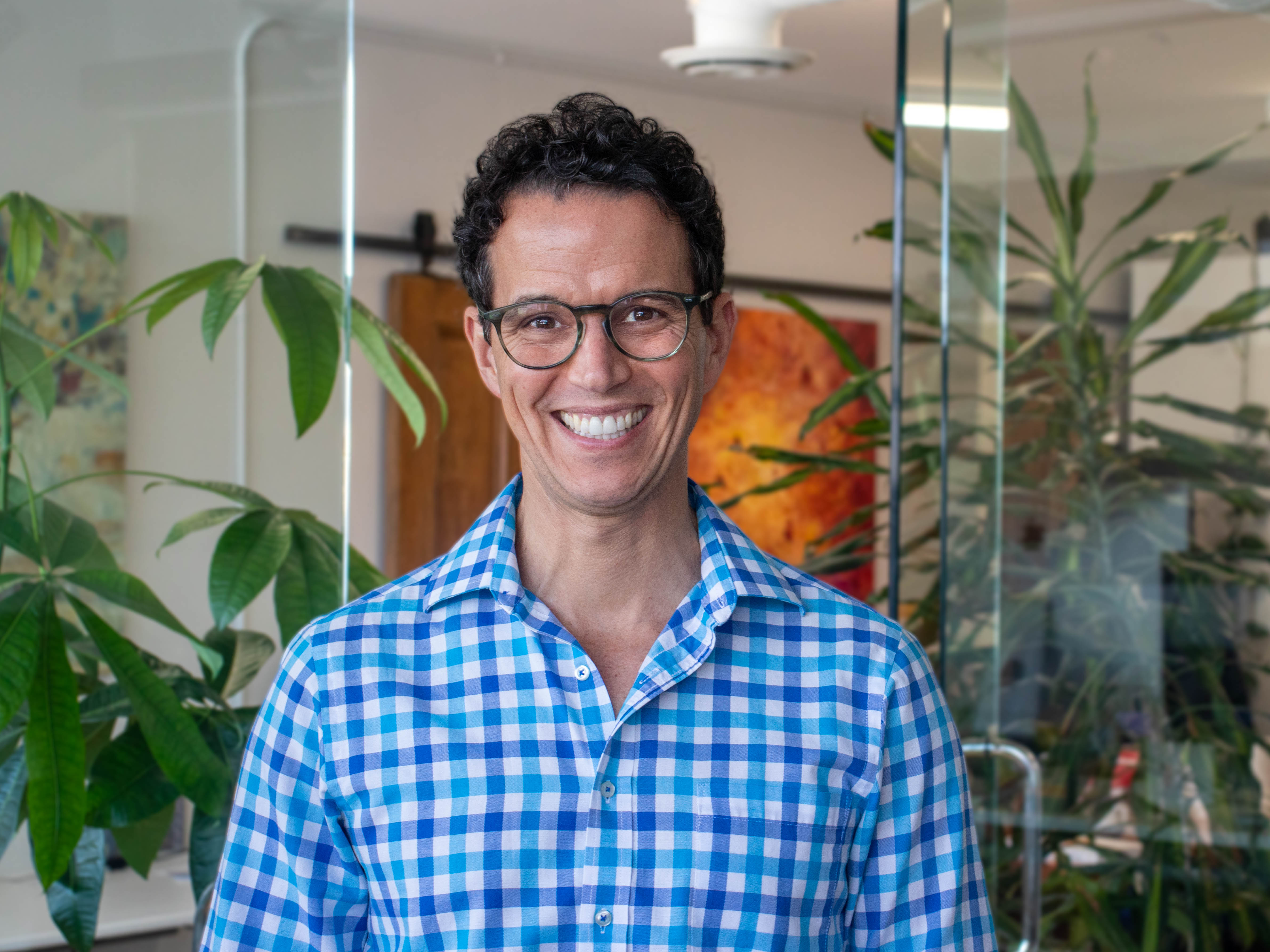
Peter Georgariou is a purpose-driven CEO whose mission in life is to be of service to others. That begins at home with his wife of over 22 years, Jody, their two daughters, Savannah and Jasmine, and their dog Charlotte, and extends into his professional and community life.
As Founder and CEO of karmadharma, Peter helps organizations unlock their potential through strategy, marketing, and people & culture solutions. His work is grounded in the belief that business can and should be a force for goodhelping individuals and organizations design meaningful lives and amplify their impact. Over the years, he has guided hundreds of businesses, charities, and nonprofits to grow sustainably and serve their communities more effectively.
Before launching karmadharma, Peter spent nearly two decades with some of Canada's largest media companies; Corus Entertainment, Astral Media, and Bell Media, leading national sales, marketing, and operations. He oversaw the sales strategy for 25 radio stations across Quebec and played a central role in rolling out the iHeartRADIO brand in Canada.
Committed to community, Peter serves on the Executive Committee and Board of the Montfort Hospital Foundation, and supports initiatives that strengthen healthcare, philanthropy, and social well-being in Ottawa and beyond.
Outside of work, Peter is a lifelong learner and adventurer. He practices meditation and yoga, trains for endurance events, and spends time running trails in Gatineau Park. What matters most, however, is the time he devotes to his familysupporti… Read More


